Fake Personal Development

Be suspicious of anyone who suggests these things.

Be yourself.

Coda for: give up on your life now. You’ve done enough. There’s no need to improve yourself anymore. You can just be yourself. Time to start stagnating.

They could be talking about the unchanging portion of you that makes you who you are. Your “inner child,” perhaps. But they’re not. When someone tells you to “be yourself,” he’s telling you to give up on personal development now. Don’t be yourself, change yourself. If you need to be told to be yourself, you obviously don’t want to be yourself to start with. That’s alright, because you’re outward appearance does not define you.

It’s no crime to change yourself. What the “be yourself” people really mean to say is “don’t let other people or society change you against your will,” not “refuse to change at all costs.” But if you’re at either of these extremes, work on coming back to the middle, not being yourself.

Fate is against you.

While it’s comforting to believe my lack of success is the world working against me, it isn’t true. For 99% of people it isn’t true. It’s also a limiting belief, because by subscribing to it, I’ve immediately put my fate in the hands of others. It may allow me to make more progress for a time, but ultimately I will have to give it up to reach the highest level.

The whole point of personal development is to take control, not surrender it.

Budget your time / money / life.

All budgeting is a kludge. Real people don’t need to live by lists and check boxes. If you need these crutches, you only need them until you develop your budgeting intuition.

Budgets are training wheels. After a few months of budgeting, you give up your training wheels. Every decision you make is so good, the consummate of your decisions transcends all lists and check boxes. If every purchase you make is needed and justifiable, why do you need a budget? To prove to your mommy that you’re not wasting money? If you’re so close to bankruptcy that good expenditures will push you over the edge, budgeting is the least of your problems.

Don’t spend your life in training wheels. Outgrow the training wheels.

This applies particularly to “getting things done” fanatics. These people spend 10% of their time working and 90% developing systems to budget their time. They’ve become so obsessed with budgeting, they’ve forgotten the real thrill that lies in doing.

If you budget $120 for entertainment, and you’re at the end of the month only having spent $80, what do you do? Most teens / twenty-somethings spend (waste) the rest of the money. Our government does this too, which is why they develop huge deficits but never a surplus. If you have a surplus, you have no budget anyway. You’ve transcended budgeting. Congratulations on your new budget-free lifestyle.

Count your blessings.

Coda for: accept other peoples garbage because you’ve had too much good fortune of your own. Give all your worldly possessions to bums on the street because they deserve them more than you.

Whatever stuff you have, you deserve to have. Most of you aren’t thieves. Don’t treat yourselves like thieves.

The truth is, you need your blessings to provide larger blessings to others. I can’t make much progress in photography by giving my cameras and lenses to a needy child who wants to explore photography. It’s more important for me to keep my camera, so I can produce art that impacts and inspires friends and strangers.

If it makes you feel good to count your blessings, go ahead, but don’t let other people take from you just because you’ve been blessed. If you do, you’re saying they can use your property and energy better than you.

Live every day as your last.

This is another kludge. Kludges aren’t shameful. When you’re building willpower, they’re all you’ve got. But you have to shed your training wheels eventually.

Pretending you’re going to die at the end of every day is ridiculous. It’s not something a personally developed person needs to do. It’s something a personally undeveloped person may have to do to develop his sense of purpose. It drives you to replace comfortable busywork with important action. But once you’re on the true path, such games become juvenile.

No, you’re not going to die today. You can if you’d really like to, but I’m sure you do not.

Other people can teach you.

Nobody can teach you anything. You can only be taught if you’re willing to learn, and if you’re willing to learn, you can learn without being taught. If you want to learn, then your teacher is no more than a director and you’re really home-schooled. If you think you need to go to college to learn photography, then you’ll never be a good photographer. You’ve surrendered your life to the will of others. You’ve already given up. If you want to become a creative, interesting photographer, you have to do it yourself. If this scares you, you can’t do it.

Sure, you can change your mindset to one that allows you to learn. But don’t think others can teach you what you refuse to learn.

I’ve found this applies especially to my college courses. If I won’t learn the material yourself, I’ve already lost the battle, because I’m leaving it up to my teacher to teach me, when all he can do is reinforce what I already know. If I can’t learn it myself, I’ve got nothing.

“I will solve your problems.”

No you won’t. Only I can solve my problems. You can give me suggestions and new ideas, but only I can absorb and implement them. I can know the solutions to my problems without ever implementing them, and I’ll continue to have problems despite your solutions.

The real answer is that any form of growth or improvement requires hard work, both mental and physical. If you need to clean off your desk and organize your possessions to move to the next level, then you’re going to be doing a lot of thrashing about for a few hours (or days, depending on how much stuff you have). This is a part of growing. Personal development is not all in the mind, and other people cannot do it for you.

Blame others.

You can easily fall into the trap of blaming your mother for all your life’s short-comings, or “society,” or your boss, or your hometown, or your skin’s color. These are all traps. They feel like a warm bath because they relieve you of responsibility, but they’re about to turn into a boiling soup that cooks you alive in your own cowardice.

No, you can’t blame others. There are no ifs or buts, and you are not a special case. It may be painful, but in the long run, personal responsibility is always the better choice.

Change yourself, not your life.

You do have to change your life sometimes. If you’re tired of your parents bossing you around, don’t meditate upon it for six hours a day. Come up with a plan to get away from your parents. If you can’t do that, then you’ll have to be bossed around a bit longer.

All the wishful thinking in the world won’t touch the lives of others. Personal development is useless unless translated into action. It doesn’t have worldly power in the theoretical realm, despite our wishes.

One of the main goals of personal development is to give you clear directions, thoughts, and purpose. These are all “mind games,” but they make you invincible when taking decisive action. It took a lot of decisive action for me to get up at 6 A.M. and write this article. I could’ve easily slept longer or played video games or wasted time trying to find articles like this instead of writing. I did look for a few minutes, but it yielded nothing of value, so I immediately started writing (typing).

I wouldn’t have written this a year ago, not because I was incapable of it, but because my mind wasn’t sharp enough. I could have the idea, but the idea would be useless because I would go nowhere with it.

The purpose of personal development is to get your mind working with you so you can become an unstoppable force in implementing your worthy objectives. It’s not about blaming your parents or blaming your past or blaming society. It’s not about handing your keys over to others. It’s ten times better than psychology, because psychology is mostly crap (sorry to my psychologist readers :grin: ).

When you’re not living to your full potential, it’s very comforting to not hold authority over your life. This is why so many people enjoy fascism and want more of it in the United States. It tells them what to do. Unfortunately, when you are living to your full potential, it feels silly not to control your life.

Personal responsibility may make you sick to your stomach now, especially if you’ve squandered a couple decades to the whims of others. But this doesn’t mean you should give up power over the rest of your life. When you crash into a car or drive into a lake, you don’t give up driving for the rest of your life. Even if (God forbid) you kill another person, you still need to keep driving to go places, because driving gives you freedom like no other.

Buses can’t match the freedom driving provides, just as blaming others can’t match the freedom personal responsibility provides. When you’re aligned with your truest intentions, personal responsibility gives you unmatched strength.

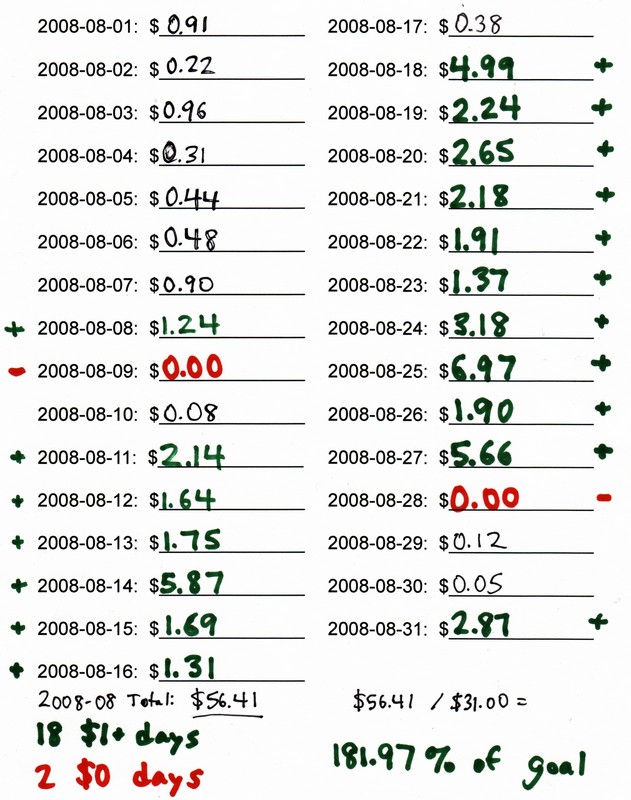
Photo: Lilac Dreams

Lilac Dreams

Lilac (purple) flowers at the Daytona State College campus. These aren’t lilacs, but I like the name so I’m using it to refer to the color.

A friend volunteered to let me borrow his lens: a Sigma EF 105mm 1:2.8. I have it till next week, so I’ve been taking pictures of stuff with the different perspective it offers. Everything’s so close; I can’t get any sort of landscapes with this. But it’s interesting to focus on the details, and I can get closer to flowers than I can with the kit lens.

While I take good care of my camera and lenses, one of the worries in borrowing a lens–or anything for that matter–is that it will break in your possession, or you’ll break it by accident. Breaking your own stuff isn’t so bad as breaking someone else’s stuff, because then you (generally) feel obligated to replace it. What happens more often is the lender will say you broke it when you didn’t. Or if anything goes wrong with it in a period of one month after you return it, the lender blames it on you. I’m not sure why this happens, but it seems to be a common human trait.

I believe it’s rooted in fear. We want a scapegoat for everything. People may even subconsciously lend items they know are about to break, just so they can blame the borrower when the inevitable happens. Obviously, this is something that you and me must work on overcoming. Most people are reasonable and down-to-Earth already; I don’t consider borrowing a lens from a friend high-risk. But, I don’t borrow by contract if it’s reasonable to buy the item instead. Contracts are bad because they’re generally with people you don’t know; it’s much better to lend an item to a friend on honor than to a stranger with the threat of law.

Borrowing is actually condemned in the Bible, and it’s not something people used to do commonly. You should borrow if you’re sure you’ll be able to produce a lot of value for the world from the loan. Unfortunately, this is very rare. Maybe one in ten-thousand loans comply with this stipulation. Borrowing (paying a mortgage) on a house is good, but too often people buy a house they can’t support. You should live beneath your means, because that’s the only way you can leverage your remaining wealth to contribute to the lives of others, effectively increasing your means. Living beneath your means does not include credit-card debt.

Editing on this photo involved adding contrast and vignetting. That bug on the left is interesting. I didn’t notice him till just now. He gets to stay, though.

Canon Rebel XTi, Sigma EF 105mm 1:2.8, 1/640, F5, 105mm, ISO100, 2008-09-03T13:03:40-04, 20080903-170340rxt

Location: Daytona State College, 1200 W. International Speedway Blvd., Daytona Beach, FL  32114

Download the high-res JPEG or download the source image.

This work is licensed under a Creative Commons Attribution 3.0 License. Please credit me as “Photo by Richard Thripp” or something similar.

Your Blog is a Marching Wiki

When I think of a wiki, I think of a collection of articles that can be edited by anyone. But wikis have another core trait. If you’ve ever looked up an article on Wikipedia, you’ve noticed that practically every other word is a link to related articles in the wiki.

There are no direct links to external sites. All those are footnotes or references, appearing at the bottom of the page. But within the text, there are internal links all over the place. It’s a self-contained Internet.

I think your blog should be the same way. This isn’t reasonable until you’ve built up a good collection of content—perhaps thirty articles at least. But once you’ve done that, you should start linking to them whenever relevant. When I talk about artistic photography, I’ll link to my gallery, and when I talk about happiness, I’ll probably link to How to Be Happy. And when I talk about linking, darn it, I’ll link to The Perils of Redundant Linking. These links are redundant to people who read my whole blog from start to finish, but those people can just ignore the links. The larger majority skims two or three of my articles to take in the essential points, and for them, the links are invaluable, because they connect them with other subjects of interest. Because the links are contextual and manually added by me and me alone, they’re better and more relevant than what any search engine or group of people can offer.

I believe in subjective reality / multiple truths. Wikis are disconcerting because they try in vain to represent an objective reality by synthesizing and representing the beliefs of hundreds of people. Sometimes, it works, but within the whole wiki you always see incongruity. Certain articles read like advertisements, others are comical, others are dead serious. Some use weak language and weasel words like “may have,” “possibly,” and “back in the day,” while others try to be overly-precise, to the point of being inaccurate. I could say John Lennon was killed at 1980-12-08T22:52:52-05, and it would be very precise, but it wouldn’t be accurate. Even if I am accurate, my accuracy is unprovable. The point is, no two people have the same perspective on wording or accuracy. When you merge too many perspectives, you end up with a muddled mess. Sure, like Wikipedia, you can still be informative, but it’s nonetheless a mess. There’s room for someone else to come along with a clear vision and really share expertise with others. Committees don’t do this. One person alone, having synthesized the perspectives of the world in a way more congruent than any collection of people, shares knowledge more compelling and evolved than all else.

Your blog should be a marching wiki, meaning it marches forward without looking back. Ordinary wikis do not march. Old articles are constantly being revised, updated, and perfected. Many bloggers and photographers refuse to let go. They spend so much time revamping old stuff, they never create anything new. If you’re drafting a book, this is fine. But like publishing a book, I consider posting an article to my blog a singular act representing your beliefs and knowledge at a fixed point in time. Unless I find a typo, or a broken link, or I write something new that expounds heavily upon the topic, I don’t update the old post. When I update the old post, it’s just to correct those errors or add a link to the new post.

Substantially changing the content of old articles can be a good thing for your readers, but that doesn’t make it worthwhile. Your time is much better spent putting what you’ve learned into a congruent, fine-tuned, new work of art, rather than adding bells to an old piece. Rewriting your archives can even be a disservice to your readers, because those articles show your history and your beliefs at a previous point in time. Do you dare erase your past? Would you rewrite and dress up an essay from middle school for a college assignment? No—you’d write something new entirely, and it would be much more evolved than your old work.

If you strive for a faster pace of evolution in your persona and your writing, tending to your old work will seem as unusual as tracing your drawings from kindergarten. Sure, tracing your childhood sketches would garner you experience, but the experience of creating anew is far greater than dwelling in the past. Our time is limited in this life, so it is important to optimize our learning processes as far as possible.

Similarly, don’t go back to old articles to add links to new articles, unless it’s something really important. I’ve done it about ten times, and considering I’ve been blogging for eight months and have written hundreds of posts, that isn’t a lot. While I could go back to Investment and Efficiency and add a whole bunch of (relevant) links to newer work, including this article, it would actually distract my readers. Simply put, if I wanted to link to newer stuff in the older article, I would’ve written the newer stuff first. I didn’t, so the older stuff doesn’t need to reference the future.

When you establish yourself as a soldier on the march, you lift a great weight off your shoulders. No longer must you worry about maintaining continuity with the past. In fact, I encourage you to openly contradict your past—should it represent the evolution of your opinions, or a different perspective that is valuable to your readers. Don’t feel you have to explain yourself. Don’t write for the critics. Most people aren’t trying to shoot holes through your work; they want to share in the wealth of your knowledge. They’re just like you. It’s far more important to cater to the important people, rather than a vocal, critical minority.

Abandoning continuity is most important for beliefs, but also includes presentation. In some articles, I highlight key points in italics; in others I use bold. In my school essays, I underline. Sometimes I’ll use inline bold headings like this, while other times I’ll use large headings bounded by line breaks, which really draw the eye. In some articles, I highlight nothing, because everything is important. I don’t have to make a list of rules for myself to govern these processes. I do whatever feels right in the present context. It doesn’t matter if it doesn’t match up exactly with my history.

Let your beliefs and standards be fluid like water, changing to meet the demands of different terrain, rather than rigid and inflexible like ice. Your important beliefs may turn to ice, but even ice can melt or break. If this happens, don’t resist it—recognize it as inevitable change: the only way to transcend your current level.

Finally, don’t create lists of rules for yourself. There are plenty of other people who are happy to do this for you; you don’t need even more rules. You are your own boss, and you control your own destiny.

Money and Love

What I made online, 2008-08

Just wanted to give you a little hint for how my websites did last month. My goal is $1 per day, and while I didn’t hit that every day last month, the overall total was $56.41, or $1.80 per day.

I can see I’m making a bigger impact on the world. In July, I made $20, so my income basically tripled last month. You can’t get that kind of raise with a regular job.

$53.73 was from Google AdSense; $2.68 was from this blog’s Amazon Associates commissions.

Of the $53.73, $1.54 came from Brilliant Photography and Personal Development by Richard X. Thripp. Th8.us made $2.30, DaytonaState.org made $42.63, and the Thripp.com users made me $7.26. Our hosting / domains bill is $15 per month, so I’m more than covered.

DaytonaState.org is targeted. A lot of people come from Google looking for information on enrolling in colleges, so the information appeals to them. On the other hand, Thripp.com is black-listed by Google, so this blog and others appear low in the search results. I haven’t done much marketing either, instead focusing on writing and producing new works of art, so that explains the low turnout. But in the long run, the richardxthripp.thripp.com is where the action is going to be.

If I was still working at the library, I would have made ten times more. But last month, I did no work. Even though I exhausted far more time and energy here, the energy comes back twofold. This simply isn’t a job at all to me.

When you’re doing something you love, it doesn’t matter how much time you “spend” or how much money you make. (You’re not really spending time; you’re saving it.) You’ll do it anyway, because it’s what you do. If you’re looking for something to love, photography is a good place to start, even as a freelancer. I wouldn’t do it myself; I’d prefer writing articles for free and making money indirectly. But every person enjoys different methods.

Also: when you love playing with LEGOs or battling in World of Warcraft, it still doesn’t matter, but the problem is you’re not helping anyone else. You think you’re doing what you love, but you just haven’t found what you truly love. When you combine ambition with a purpose that really makes an impact on people around you, you’ll find something you love far more than child’s play. It’s still play, but it’s play taken to the next level. You character has just reached level 100. He’s replaced hit points with love points.

A Free Nation Has Free Money

The purpose of any good government is to protect the lives and property of the people. Property is money. Money must be solid. It must be free, in that it is independent of the nefarious deeds of plutocrats. It doesn’t matter how much free speech or free love you have. If you have no money, you have no property, and all your “freedoms” are worthless.

The Federal Reserve, masquerading as part of our government, bails out corporations that have gotten themselves far into debt. In theory, this protects the jobs of the people, because the corporation keeps going. How does the Federal Reserve do this? They print lots more money, backed by nothing, and give it to the corporation, making up for billions of accumulated debts. How do corporations like General Motors and Bear Stearns lose so much money? By becoming unprofitable, bureaucratic failures. Companies that should go out of business are propped up by the government. Every time they do this, our currency gets closer to worthless. An invisible tax is placed on the money in your bank, because its value declines progressively.

When you prop up failures, you bring down everyone else. Small businesses that are rightfully profitable get no help, while losers are supported by the public debt. The rich get richer, the poor (us) get poorer, and the middle class disappears as we turn into Soviet Russia.

We continue creating more and more money out of thin air to fund wars in Iraq, Afghanistan, Georgia, Yemen, and more, all for the continual war on “terror.” We have troops in 100 countries, spread all over the world. This is all funded by the continual whoring of our dollar. We give China I.O.U.’s in exchange for billions of dollars in goods. What’s going to happen is that we won’t be able to pay them back, and then they’ll use their U.S. money to buy out our country from under us while our currency and bank accounts become completely useless.

This shouldn’t happen. A $20 bill is a piece of paper, just like a $20 bill from 1900. Only then, the bill was worth the equivalent of $1000 of my dollars. What happened? Our money is fake now. It has no link to gold. Private bankers, as part of the private company that controls our money (the Federal Reserve), can print any amount of money on a whim, devaluing our labor. Not just future labor. All the liquid wealth you’ve accumulated in your bank account shrinks at once. All your hard work over many years is taken away at once. And like saps, we all accept it.

What is the root cause of the financial failure of our businesses? A foreign policy which involves us bombing everything that moves, and terrible taxes which kill all good business. An example: owning a restaurant is one of the worst businesses to be in, because every department of the government gets a piece of you. 80% of your money goes toward government inspections and regulation fees. It’s hard to even cover your expenses, no matter how efficient you are.

When you have a feather-bedded, socialist government, the only businesses that can make it have to government-backed. They pay all these terrible fees, but are subsidized by tax dollars. Without government exemptions, the ordinary businessman can’t afford to start his own corporation. Have you seen what the taxes on a sole proprietorship are like these days?

Instead, we’re all relegated to serfdom working for companies like Wal-Mart. I must admit, Wal-Mart is about the most efficient and prudent company around. But they’re still part of our socialist government. The root cause is our fiat currency, our continual warring, and our meddling with the free market. It’s not a “free” market now. It isn’t a free market when you’re taxed at a rate of 90%. Even if you work under the table, you pay huge taxes. Sales tax is one. The rest is in prices that are three times higher than they should be, because every merchant along the way has to cover his tax burden by raising his prices. The United States is the Roman Empire, Part 2.

People are working harder than ever. It’s only because our wasteful government has completely failed us, just as Great Britain had failed our fore-fathers before their noble revolution. 40 years ago, a man could do good honest work and support his wife, several kids, a car, and a mortgage with money to spare. What happens now? Couples have to take out life-time mortgages and both work 50 hours a week in career jobs, leaving their kids to be raised by strangers. Still, they can barely pay the bills. Are they slacking off? Not in the slightest. The currency traders and international bankers get richer and richer while we slave away as pawns of the state.

Students have to work full-time while attending college just to make ends meet. My family can’t even keep a cool house or travel freely, because of the terrible cost of fuel. This isn’t because we as a people are running out of fuel or pillaging the environment. It’s because our money is becoming worthless. There’s plenty of gas to be had at $3.60 per gallon: there are no shortages. Considering gas was 85¢ a gallon in 2002, my money has lost three-fourths it’s value. Your four years of labor from the 90’s is worth one year of labor in 2008. How does that make you feel?

Our technology and collective intellect keeps getting better, but we keep having to work harder and smarter for ever-smaller gains. If innovation had stood still since the Federal Reserve Act of 1913, we’d be working for two cents a day by now. It’s only the unwavering American spirit of growth and progress that has secured what little we have now. War, fear, fake money, and martial law isn’t American. This is supposed to be the home of the brave, remember?

A free nation starts with a currency backed by gold, and a market backed by the success of its marketeers. Not the government. The government cannot fight wars nor grant rights. Only God can. The government can only protect or usurp your rights. By usurping your labor, the U.S. government is usurping your rights and your livelihood. It has to stop. It will stop when our government falls and our money is worse less than toilet paper. Only then will people see the truth, but all will be lost and we’ll have to start anew. I’m already getting ready.

For now, stay below the radar. We’re losing our freedoms by the minute. The police are not on your side. Don’t get stuck with a heavy mortgage, keep your mouth shut if the IRS calls you, and don’t pay taxes that you don’t have to pay. Don’t join the army, and if you’re turning eighteen, stay off their list. Don’t vote for Obama or McCain because they’re both identical. A vote for Mickey Mouse is better. Don’t keep too much worthless money lying around. Go back to bartering if you have to. And most of all, foster a spirit of peaceful, nonviolent resistance to government oppression, just as Gandhi wanted.

Conquering Big Problems: An Introduction

I don’t hate problems. Problems are challenges, and all challenges are an opportunity for growth. Big problems are an opportunity for big growth. But a problem that has only grown through negligence yields little growth.

A small hole in your roof is a small problem. Sure, the occasional bug will come in, but it isn’t any risk to your shelter. If it’s hot out, turn up the air conditioner. If it’s cold, put some more logs on the fire. If it rains, put a bucket under it.

Perhaps you grow tired of these kludges. Every month you’re paying more on your electric bill. You left the house for a week, the bucket filled up, and the overage flooded your living room. The hole has grown a little bit. Birds are beginning to nest in your house. They are feasting on the lizards that have also found refuge inside.

The next step is to cover the hole. It’s still under control. Bits of your roof are being eaten away, but you can cover the hole with a frisbee. So you do that. The frisbee blows away. Darn it. Next step is to put a rock on the frisbee. You’re scared of heights, so it’s all you can do to go up there. In fact, the first time you threw it up there and got lucky. This time you aren’t so lucky and the frisbee lands far from the hole.

You don’t want to pay anyone to go up there and secure the frisbee, or, heaven forbid, fix the hole. This is because you aren’t convinced it’s a real problem yet. Instead, you fasten a rag to your inside ceiling with duct tape. The rag blocks the hole completely. A few rainy days go by, and only a few drops fall. You’re heating bills are back to normal. Everything seems alright.

Then, a big storm comes. Rain pounds your roof for hours. The small hole becomes a gaping hole. Your attic floods with water, until the whole roof collapses under the weight.

This is now a big problem.

All along, you had warning signs. The birds, the lizards, the leakage, the sagging ceiling before the collapse. Those events were all telling you to do something, pushing you, forcing you, yet you ignored the signs.

Don’t ignore the signs.

If there’s a problem, fix it now. If you don’t even know what the problem is, try to find out. Always be in motion.

I have a friend who didn’t want to fix her teeth when she was younger. She had all sorts of cavities and decay, but she’d protest that it wasn’t worth the money to fix. I don’t know if it was for lack of flossing and brushing. Her excuse was that she could wait till she’s older and have all her teeth removed and replaced with dentures. Coming from a woman in her thirties, this is nothing short of absurd.

Recently, she told me that she had $5000 in surgery done on a molar, with no insurance to cover it. The tooth had to be drilled out and bone had to be replaced. Knowing her, she waited too long; way too long. A relatively minor problem became a huge pain requiring invasive surgery. A little problem became a big problem.

Here’s another example. For six and a half months this site was richardxthripp.richardxthripp.com. I always intended for it to be a multi-user site, but didn’t consider Thripp.com because it was taken. I became convinced that richardxthripp.com was better, more distinctive, more interesting, despite it’s length.

I’d become increasingly aware of the length of the domain. When I moved to WordPress MU at first, I had to switch to subdirectories as my host wouldn’t support subdomains. I became richardxthripp.com/richardxthripp, but I continued using the subdomain in print (with an HTTP 301 redirect).

When I switched hosts, I soon became aware the new host supports virtual subdomains. “Can’t change it,” I thought. It’s too much trouble. It’s not designed to be changed. Subdirectories are better branded. Everyone’s used to it. This was actually sour grapes and complacency bias. I didn’t find out till thripp.com became available, which I immediately snatched up. After a couple hours of hard thought, I decided to switch to subdomains and move from richardxthripp.com to thripp.com all in one go. It was hard work, securing all the old links while making the switch, but it was worth it. At the same time, I chose to begin using “rxthripp.com” where convenient in print and in branding for this site, as a shorter domain, though it redirects to the formal address, richardxthripp.thripp.com.

I’ve already printed “richardxthripp.richardxthripp.com” on the backs of thousands of 4*6 photographs. I give them out to everyone I meet. It may take me years to exhaust the old stock. But the good thing is I’ve still fixed the problem early. I could’ve waited till 2030 once I’d printed the old site on millions of items. Perhaps I’d have published several books with the address. Either way, even the old URLs could easily work forever, changing them would produce huge discontinuties in my identity. Compare that to a small blip now. Before the switch, the problem seemed huge (WordPress MU doesn’t let you switch domains and URL structures easily). In hindsight, it’s nothing.

Don’t convince yourself that something isn’t a problem just because it feels safe. I’ve done it too many times before. If you’re a thief but you’ve convinced yourself stealing is okay, that’s a problem. In ethical dilemmas and beyond, I find it useful to ask, “If I had unlimited money / time / resources, would I think this is wrong, or a problem?” “If I had unlimited money, would I go to college?” If the answer is no and you’re in college, you have a problem. You shouldn’t be there. I have a problem right now, because I’m doing just that. The first step is acknowledging you have a problem for which you have no solution nor plan of action. That takes courage.

Is it really a problem?

The problems you have may be nothing. Think of the ideal you. The ideal you probably has loads of money—not that that defines him. It’s simply a fact that huge sums of cash can obliterate huge problems. If you have enough money, you can literally move a mountain. The money doesn’t move the mountain per se, but other people will be happy to do the work in exchange for it, because they know they can use it to get the food, houses, cars, and gadgets they need. The ideal you has a lot of money, because the ideal you has done so much good for the world that he is a magnet for coinage. People are literally forcing him to accept donations.

If you have a problem that can be solved by money, it isn’t a big problem. A big problem is being at the end of your life but not having found your purpose. A big problem is dying from cancer but not knowing the cure. A big problem kills you, or has a highly damaging effect on the health of you or your family. Most of life’s problems are not big problems. For the purpose of comparison, small problems can be called big problems. Life isn’t objective.

Persistent problems require persistent solutions.

Thirst is a big problem. If you refuse to drink liquids for a few months, you will die, no doubt about it. If you drink sixteen gallons of water today so that you can go on a liquid fast for the next few weeks, don’t be surprised when it ends disastrously. Thirst is a persistent problem. You can’t drink your life’s water now to get it over with. You have to take in fluids every day. You have to eliminate these fluids every day once they’ve served your body’s purpose. Most people have to do this many times per day. It never ends. The problem cannot be stopped. A one-off solution simply won’t work; you must be constantly fighting the problem to keep it at bay.

A normal problem requires a heroic solution; a singular, overwhelming assault in which the problem is systematically slaughtered. I borrow this terminology from heroic medicine. In heroic medicine, if your arm is itchy, the solution is to chop it off and cauterize the flesh (I exaggerate). But let’s think of a less extreme, yet still heroic, solution. You know your arm is going to feel an itch again. It’s done it before, hundreds of times. You’ll have to scratch it. It will distract you many times. Why not just scratch it now until it’s scarred and bloody, so you never have to do it again? Of course that’s a horrible idea and won’t work. After the mutilation, the scabs will prove themselves far itchier. The next heroic solution is to remove the sensation of touch from your arm. This can be accomplished through the marvels of modern surgery. Maybe you won’t be able to feel anything after electrostatic shocks?

Obviously, applying heroic solutions to persistent problems is completely ridiculous. Yet you see people doing it every day without realizing it. Usually it just isn’t so blatant.

The Case of Cancer

Cancer is a good example of a persistent problem being attacked with a heroic solution. What are we told? The solution is early detection. This requires regular probing. Once you’ve been probed, and the cancer, discovered (it’s inevitable), the next step is to forcibly remove it. If it’s not in a position to be cut out of you, we’ll poison or burn you till it dies. If this were a Pokémon game, the battle would be Human [Pikachu] vs. Cancer [Mewtwo], and the theory would be that Pikachu has 250 hit points (HP) and Mewtwo has 240. Mewtwo’s only known skill is “String Shot,” which reduces your agility but doesn’t reduce your HP. However, after being hit with String Shot 25 times, you die. Letting the cancer live isn’t an option. The only way you can effectively hurt Mewtwo is with Equal Damage, which reduces Mewtwo’s HP by 10, but also brings you down by 10. Think of this as chemotherapy treatment. After 23 rounds of “treatment,” the cancer is weak and near death, with 10 HP. You are weak and near death with 20 HP, but the cancer is weaker. The doctors and your family are cheering. “We’ve almost done it!”, they shout. Then, Mewtwo unleashes his secret weapon, a move called Recover which you didn’t know about. In one turn, his HP shoots up to 130. He’s stronger than ever. You use Equal Damage one more time, and it’s 120 to 10. Then, he knocks you out with one String Shot. My cousin had brain cancer, back when we didn’t know the cure. He was doing well with radiation treatment. Then, the cancer came back, stronger than ever, and killed him just like nothing.

Little did we know that Pikachu has a secret move called Fruit Seeds, in which he attacks Mewtwo with the seeds of fruit that break down his defenses, cutting his HP by 100 while increasing ours by 50. The cure for cancer, which I’ve written more about here, is a vitamin found in the seeds of fruit such as apples, watermelons, and especially apricots. Rogue healing cells, unassigned a duty, reproduce swiftly, clogging your internals with unproductive tumors. The only way to kill them is to provide your body with the enzyme (vitamin B17) that breaks them down. Cancer is a persistent problem; the persistent solution is to eat fruit every day, whole with the seeds. If you already have cancer, the tumors won’t go away, but they’ll stop growing and you’ll live. But if you’re at the point that three String Shots will wipe you out, it may be too late.

Attacking cancer with cutting, burning, and poisoning is archaic. It’s a heroic solution attacking a persistent problem. It doesn’t work. It’s a leftover from the dark ages.

Don’t let mismatched solutions invade your life. Instead of belatedly masking tooth decay with expensive, painful root canals, start flossing your teeth now, every day. [Tip: bleeding is normal because your gums are damaged from unrelenting exposure to bacteria. It should subside within two weeks.] If you hate your name, and you know you’re always going to hate your name, change it. My Dad did this back in the 80’s, and from him I got the Thripp name. Don’t wait. Start telling people your new name before you even try to have it changed. A terrible name is a big, unceasing problem, and it requires a big, unceasing solution.

If you’ve come this far, you may now realize you have no big problems. Get some, because in part 2, I’ll be tackling intermittent and singular problems.

The Library on Hold

If you follow my Twitter, you know I’ve been consumed with coding the OPAC for my public library these past seven days. Also, I pissed off greatly angered my Dad recently. I’m constantly negative / patronizing around him. It’s like a subconscious force. So much for trying to be personally developed.

The library is looking really great now; check out this search for example. I’m putting it on hold starting right now. I won’t work any more on it for one month. Hold me to that promise, okay?

The problem with it is that it’s not the best way for my to contribute to the world at the moment. The world starts at home, so it doesn’t matter how much you’re contributing if you’re leeching at home. I have some work to do.

I listened to a lot of back episodes from Uncontrolled Vocabulary. Fascinating talk show on librarianship. I didn’t know that people talked about things like taxonomy schemas and Library of Congress subject headings en masse.

I’m going to take and post some new photos. Maybe I’ll even write something. Or if I’m feeling lazy, I’ll take a photo and then write a short paragraph about it. It’s all good.

I wrote three posts on Daytona State College News a few days ago. That thing gets tons of search traffic. Must be because of it’s high ranking.

I’m counting… I have 18 days till the return to college. 10 days till birthday #17. I still have time to make some progress.

I replaced the $20/day plaque with one that says $1/day. That’s more reasonable. My online ventures are averaging 60 cents per day this month. It’s in reach, I say!

See y’all around. Actually, not around. Right here.

Intrinsic vs. Extrinsic Value

Something that is valuable without strings attached has intrinsic value. I find intrinsic value is far more reliable than extrinsic value, because it’s self-reliant, independent, and free of the influence of others. The opposite of intrinsic value is extrinsic value. I like “extrinsic” as a word, but don’t see it used much. What it means is the value is assigned to the item by external forces. The item is worthless on its own. Or perhaps it has a mix of intrinsic and extrinsic value, so it is simply less valuable.

One thing that’s hard to accept about intrinsic vs. extrinsic value is that it’s a sliding scale with different paradigms. Nothing is binary. Something that has intrinsic value in one context and have no value in another. You might think the item has extrinsic value, and from a completely objective perspective it might, but it’s entirely okay to call its value intrinsic for the sake of comparison.

A great example of the two types of value is money. At the extreme end we have currencies made of paper and backed by nothing more than military might. These are called fiat currencies, because they’re valuable by legislative fiat (an order). The United States has fiat currency. My money has no value unless other people agree that it does and will exchange goods or services for it. It cannot be turned in for anything of value (besides coins), more of it can be created at virtually no cost at any time, and if all confidence is lost in it, it doesn’t even make good toilet paper. The money’s value is entirely extrinsic. In fact, it’s declined considerably in my short life. I remember in 2002 when gasoline was 85¢ a gallon, but now it’s over $4. It’s not because of shortages—there’s plenty of higher priced gas available. In terms of fuel, my money is one-fifth as valuable as it was six years ago. Granted, the increased prices are also due to the oil companies joining to form monopolies, but if our money had value that was fully intrinsic, such massive losses would be impossible.

Now, the U.S. dollar has not always been fiat. Before Nixon abandoned the Bretton Woods system in 1971, you could trade in a dollar for 1/35 an ounce of gold. So it had intrinsic value. During the world wars, convertibility was abandoned so more money could be printed, so for a time there was no intrinsic value. But even under Bretton Woods, paper dollars didn’t even have intrinsic value so much as representative intrinsic value. They’re still worth nothing on a deserted island, but as long as we were under the current system of things, their value may as well have been intrinsic, because they could be exchanged for something solid. The value was never fully intrinsic, or else Nixon wouldn’t have been able to pull the plug.

A step up from paper currencies are metal currencies, like the dimes and nickels in your ash trays. Though illegal, in times of panic they can be melted down to build real things, because they’re made of metal, not worthless paper. Gold and silver coins are even better, because people universally value those metals. However, as building materials, they are less valuable. Going back to paper, the bills in my wallet have some intrinsic value I forgot about. If it’s very cold and I need kindling to start a fire, I’ll be happy for my stack of $1’s.

The king of all currencies is gold bullion. It’s never going away, because people universally believe it has value. Its value is unchanging and largely intrinsic. When I see the worth of an ounce of gold is soaring above $1000, I don’t buy the hype that the gold has more value. What’s actually happening is that our dollar is becoming less valuable, but gold is the same as ever. Now, if you can buy more with $1000 of July 2008 money than you could with, say, $500 of July 2001 money, that’s doesn’t mean gold has gained value. It just means everyone is taking losses, by providing goods that are worth more than the money they charge. When the empire (the United States) is dying, everyone takes losses.

Even gold doesn’t have the true, objective type of intrinsic value I talked about at the start. If you’re back on your deserted island, all the gold in the world won’t do nothing to get you out of there. An airplane is something with solid intrinsic value. But you still need fuel, a pilot, and lots of other stuff. Heck, you even have to depend on the laws of physics remaining stable so that it continues working. But most of us would agree that little of its value is extrinsic, so those concerns are small. If all 6.5 billion of us agreed tomorrow that gold is as worthless as water, it would be that way in an instant, though.

Some things have intrinsic value that’s fleeting. The apples at the grocery market are valuable as food, but as soon as they turn rotten, the value is lost. The same can be said for human life: my Grandfather has no intrinsic value, because he’s dead and burned. Nor does my cousin, in spite of being dead and preserved in a coffin. The only value of his body is assigned, because many of us believe in stuffing and preserving corpses for some reason. We believe a corpse has value, but that’s extrinsic to the corpse. A person does have intrinsic value, but only while living. Value shifts from intrinsic to extrinsic upon death. Extrinsic value is not universal, either. My family values my cousin’s corpse much more than my neighbor’s. Extrinsic value can be fleeting. A lottery ticket is valuable extrinsically, but only till the numbers are called. Then it’s worth nothing. If it’s a winner (never happens), the value shoots up all at once, but it’s still extrinsic, just like the coupons in my wallet, because it’s reliant on fulfillment by others. Intrinsic value is not, or in relative cases, it’s reliant on unlikely-to-change entities like society or a humongous government, so it’s always a safer bet.

Where you can use the two types of value in your life, is in analyzing the time and money pits around you. Recognize that if you’re pursuing goals with extrinsic value, your goals belong not to yourself, but to other people. Sometimes, supporting the goals of others is inevitable. Florida Power & Light will cut off my family’s power if we refuse to continue to pay them in extrinsically valuable money. Could we live without power? Probably, but it isn’t practical. I couldn’t even share this writing with you without the power for my computer. Money is something most people value by mandate, despite being extrinsic. It even says on my $1 bill, “this note is legal tender for all debts, public and private,” so I’m required to accept money as a valid form of payment even if I open a business. The business isn’t truly mine if I’m required to give people valuable stuff for in return for crap (fiat money). But I accept that I have no alternative with what power I have now. There’s a massive gulf between this lost freedom and the lost freedom you are probably subjecting yourself to.

One thing that definitely has no intrinsic value is a college degree. A college education has intrinsic value, but only to the person receiving it, and then only if it is applied. A modern college education is utterly worthless. College is a crock. You’re trained to be a docile slave for any master and brainwashed to tell lies as truth to support the state. Lies like global warming, the cancer myth, and politically-correct language. Instead of learning real stuff like history or how to spell, you have to read and write garbage about The Epic of Gilgamesh. It’s worth less than nothing. College saps your mind and spirit. It is a self-accepted prison and you are a self-accepting prisoner. I am currently a prisoner with you, unfortunately.

What a college education does have, is plenty of extrinsic value. Employers, in cahoots with the universities, agree to accept only mind slaves with worthless degrees for jobs. Or perhaps they’ll accept anyone, but pay you much more if you’ve gone through four to six years of obedience school (on top of thirteen years of mandatory training). College is a job where instead of being paid, you pay. Can’t you see the irony there? You learn B.S. subjects like humanities and calculus, wasting upwards of thirty hours a week “studying,” when really you’re just memorizing pointless trivia and useless formulas to reiterate for a test and then forget. A typical collegiate essay is a series of citations, footnotes, references, maybes, “he or she”s, “what if”s, and semicolons. Nothing is from the heart, everything is crap, and no one would read it if they weren’t being paid. There’s no growth and you’re not developing as a person, despite how you may protest. College is at best an expensive social experience, and even that is on shaky ground.

A college education is firmly in the category of extrinsic value. Unlike universal concepts like serving others, inspiration, and passion, and working for yourself, college is ultimately a waste of time. It’s okay to do things with extrinsic value, even if they cost huge amounts of time and money. Repeat after me: “I, Richard X. Thripp, allow myself to pursue projects that have no intrinsic value.” BUT, you cannot live in fear by deluding yourself into believing you’re acting on some higher purpose. There is no higher purpose to my college education. Tasks with only extrinsic value must only be pursued for utilitarian purposes, should you claim to be living courageously.

Buying things that have mere extrinsic value, unless to resell, is something I cannot live with. Diamonds are an example. Unlike gold, they have no intrinsic value because they’re as common as dirt. One company (De Beers) controls all of them, releases very few, and advertises how wonderful and valuable they are. De Beers has managed to make diamonds extrinsically valuable to an insane degree. If you can make yourself (or a product) highly valuable, you can make a lot of money, even if it’s extrinsic.

Intrinsic value is the only path that has a soul, though. In sociological terms, coordinated efficiency (i.e. teamwork) represents intrinsic value, whereas allocated efficiency (i.e. buy the best people) is to extrinsic value. Money has its place: it represents you contribution to the world (either type of value), and it can be exchanged for goods and services of either type (food vs. diamonds). But if you do something for money alone, that means it has only extrinsic value, be it to yourself, the world, or both. With my website, I hope I’m doing something of intrinsic value to others, and I know it has intrinsic value to myself. I take, post, and give away creative photos, write free and hopefully insightful articles, and develop as a person through all of it. If you’re doing something of intrinsic value, you’ll know it because you’re energized, dedicated, and excited about it. If you don’t feel the heat, you might be providing a service that’s intrinsically valuable to others, but not to yourself. If I fixed computers for a living, it would be an important service to others, but it wouldn’t do anything for me. The other thing that can happen, is that you’re doing something you love (intrinsic value for you), but its worthless to others. Perhaps it is painting, playing piano, or taking nature photographs. What you want to do is to find something that’s intrinsically valuable to you and others, or convert what you’re presently doing over. Often, this just involves publishing your art online, or releasing a music album by burning the CDs on your home computer. But when you’re on the path of good for yourself and the world, everything will feel right.

While it takes a lot of soul-searching to reach the goal, I can tell you some of the clues that you’re on the wrong path. If you’re not sharing it with others, it can’t have any value to others. The first step to converting something that’s valuable to you but not to others is to show it to them. If you’ve written an awesome book but can’t find a publisher, just set up a blog and give it away free in installments. Tell a few friends about it. If it’s interesting or useful, lots of people will pick up on it and visit. You’ll know this because you’ll be getting lots of comments and trackbacks, and your bandwidth meter will be maxing out quickly. If this doesn’t happen, it means you suck. It’s okay. Right now I suck. But sucking is the only way to progress.

Once you’ve built you a following and love what you’re writing, you’ve already made it. It doesn’t matter if you’re giving everything away and losing money. If you have a website, and a lot of visitors, it’s impossible not to make money. Then put ads across the site. Register for Amazon Associates too, then start dropping product links everywhere, like this. Soon, you’ll be making money off something that’s intrinsically valuable to everyone, which is great. A lot of people will try to tell you that you can’t do it, you have to pick between money or heart, and that you should keep your day job and just follow your passion on the side. Ignore them and forge ahead.

If you’re working for a corporation with no intrinsic value, it probably puts up a smokescreen of purposeful charity to substitute. Instead of changing the world directly, the company donates a couple percent to charity. This is the “throw money at the problem” mindset, and instead of integrating charitable practices into the business, it’s just tacked on as a “me too” afterthought. Corporations like Wal-Mart, Target, and Publix do this. Then, they’ll come up with some phony mission statement for their employees, like Office Depot’s “delivering winning solutions that inspire worklife.” I couldn’t help but laugh hysterically when I first heard that one. Next, require all the employees to wear shirts with the mission statement and chant it over the intercom.

Ask any candid Office Depot employee if he cares about the mission, and the answer will be an obvious no. Very few people who work there, or have any sort of job, do so for an intrinsically valuable purpose. “For the greater good of all humanity” is an excellent purpose, but most companies that bandy it about don’t believe it. It is of extrinsic value to them. It’s fake, a charade to fool dummies and investors. You’re never living intrinsically if you’re living fakely. It’s better to work for a company with the mission, “to make the most money possible, at all costs.” Or live your life like it. But that’s a petty experience. Most companies are not that bad. They have a decent amount of respect for their customers and employees. But to call themselves charity cases is false and pretentious.

What else is only of extrinsic value? Certification. Education. Expensive clothes (unless radiation proof). Rites of passage. Careers. Tradition. Rules and procedures. Legacies. Religion. Sleeping at night. Clocks. Being an employee. Corpses. Funerals. All these have no value on their own. Only if other people agree, or demand them, do they become valuable, and then only extrinsically. Don’t be too worried about them. They’re red herrings.

What things do have intrinsic value? Love. Doing what you love. Purpose. Learning. Passion. Discipline. Wealth (for leverage). Power (the power to know better). Respect for human life. Serving others. Serving yourself (you have to to serve others). The list goes on, but you can see that aligning yourself with these principles, and paying no attention to the ones of extrinsic value will alienate a lot of would-be friends. Do it anyway.

Practical Applications of Seven Life Lessons of Chaos

Practical Applications of Seven Life Lessons of Chaos.
Essay by Richard X. Thripp.
2008-07-17 — http://richardxthripp.thripp.com/essays
PDF version (190 KB).

Herein lies chapter-by-chapter applications of the concepts in Seven Life Lessons of Chaos, a crazy but eye-opening book by John Briggs and F. David Peat. I wrote this for the QUANTA learning community (daytonastate.edu/quanta) in April 2008, and have been using the lessons to be out-of-the-ordinary ever since.

Chapter One
To be creative, you should embrace the random, the “slip with the chisel on marble” (24), the chaos of the vortex which channels your energy. Creativity is not “a special ‘talent’ reserved for a few” (11), but rather a mindset. Forfeiting the “constricted grip of our egos,” our “fear of mistakes,” and our love of staying in “comfort zones” (29), we can approach something as mundane as baking a loaf of bread as “always new” (30). This “sense of newness” (30) lets us reach a higher level, rewarding as with “moments of flow and exhilaration” (27) by our passionate efforts in whatever craft we pursue.

Briggs and Peat relate the chaos-approach for creativity to the way of self-understanding in many religions: you go into the wilderness, be it a real forest or symbolic meditation. This de-clutters your mind; “by letting go of consensual structures, a creative self-reorganization [becomes] possible” (22). The new organization is based on “nature’s creativity” (19), which is like the random yet enticing patterns seen in clouds or galaxies. The authors support this with J. Krishnamurti’s words, among others: “truth is not a fixed point,” not even a concept; it “holds us all together,” yet we must each find a unique version of it (21). Paul Cézanne’s art represents the new truth, which revels in “creative doubt” (22). Each stroke changes “the entire scene,” questioning what he painted just previously (22). Chaos theory is a paradigm shift from objective reality to subjective reality, where we recognize that each person has a unique view of the world (truths), that natural processes are infinitely complex, connected, and indivisible, and that a Zen-like flow (clarity of mind) connects us with ourselves, not intellectual introspection.

Welcome to the Future Modern Architecture

I can apply the principles of the vortex to photography as an art form. At times, I have “obsessions with control and power,” spending hours assembling a scene like the photo on the left, my “fear of mistakes” (29) pushing me to put everything in its place under the guise of creating something. At other times, I walk around with my camera, taking pictures of everyday objects at different angles or under odd lighting, and the results, while not “creative” in the sense of building something new, are my most engaging works. I might spend thirty seconds composing the scene, but I am in the flow, which is “intense clarity about the moment,” and, most importantly to me, with “no concern for failure” (27). This is what I did with the photo on the right, which is a of an everyday building in the Daytona Beach College campus, but with a sense of clarity from the clear sky and nonstandard composition, and there I am using chaos theory. I should now do more of the right and less of the left.

Chapter Two
The lesson is that small efforts can have rippling effects across vast oceans. While the conventional wisdom tells us that the world is composed of “linear systems,” where “small influences” produce small results (33), it is often the case that the results are exponential rather than linear. This is the difference between 10*10 (one hundred) and 10^10 (ten billion). In this way, a thing is amplified, as in the metaphor of “the flap of a butterfly’s wings in Brazil” causing “a tornado in Texas” (33). We can deeply better society through positive acts such as chatting the weather or smiling at strangers, because we are improving the social climate which we are all a part of using “subtle influence” (41)—our cordiality produces a feedback loop in others, for which they become more upbeat, positively influencing the people they encounter, and so on.

The authors explicate their concept with the meteorological experiments of Edward Lorenz. He made long-term weather calculations, but took a shortcut while double-checking the results: he rounded to three decimal places instead of six (32). The results were far different; while he anticipated a .1 percent error margin, all the steps in the calculations were dependent on the data computed previously, so the rounding error increased by orders of magnitude through the process. This is the way the actual weather works; small influences are magnified through “iterating feedback,” so an increased temperature or air pressure cycle may be the root of a hurricane. Nature works this way too; by killing off cockroaches, lizards may die, which may deprive snakes of food, which may eventually lead to the destruction of an ecosystem. Briggs and Peat teach us that we can use the butterfly effect to exercise power in our everyday lives, where we may seem powerless. Rosa Parks, who would not be forced to the back of a bus for a white man, created butterfly power, in which thousands of others boycotted the buses, leading to the eventual fall of segregation (28-29). This is chaos theory in action.

The principle I work by in library service is “do good always,” meaning that I look out for the best interests of our patrons, putting in effort to get them the information that seems most relevant and reliable, ranging from questions like “where’s the bathroom” to “how can I build a bathroom?” (I had that question last week, and was thankful to find that The Kitchen & Baths 1-2-3 was in the right place on our shelves.) I have gone to libraries where the librarian is rude or dismissive of inquiries, where I could get no help searching the computer databases, and where asking the librarian to look up the book for me seemed like an imposition. My grandmother, in searching for a book on health remedies, recently told me that she was told it was “not their job” to “train” patrons to use the neo-card catalog (computer terminal). I do not demean patrons for bringing in lists of popular movies they want to put on reserve, or for asking how to use a mouse or set up an email account on our public computers, and it is my hope that through the butterfly effect I am positively influencing the entire community.

Chapter Three
“Going with the Flow” shows us that groups formed from chaotic self-organization are “highly adaptable and resilient” (59); often moreso than their structured counterparts. John Holland argues that most of our laws, such as for “traffic, health and safety, [and] consumer protection” were not “planned in advance,” but came about in response to feedback loops, contributing to their hardiness (59). This shows that good systems evolve from the bottom up. Trying to control the “natural chaos of society” is ineffective, such as the Chinese communists’ attempted command economy, which caused “catastrophic shortages and famines” (60).

Organizations, including governments, corporations, and even our beloved Daytona Beach College, tend to become “increasingly mechanical and impoverished” (69), in that as they increase in size, policies evolve to treat people impersonally, like cogs in a machine, for the purpose of efficiency and formality. Unforgiving, check-box style employee evaluations make it so that “people are not allowed to . . . make mistakes without paying heavily” (70). While such companies champion creativity in name, their hierarchal structure is made for “preventing those creative qualities from ever self-organizing within corporate walls” (70), enigmatically.

Despite rigid structure, all organizations have “subtle influences and chaotic feedback”; they must have “strange attractors” to keep people, and are quite often “open, nonlinear systems” (71-72). When we stop working toward an “ideal” of a inflexible, mechanical bureaucracy, instead embracing fluidity, innovation, and other more human traits, we can harness our creativity as a whole.

I can apply the lesson to group interactions, such as in QUANTA’s activities and projects. David Bohm says that dialogue is deeper than discussion, where “we suspend our opinions and judgments in order to be able to listen to each other” (74). Too often I stick to my own ideas and reasoning while ignoring the input of others, so “suspend[ing] and transform[ing]” such “nonnegotiable convictions” (74-75) can make me a diplomatic mediator and a more reasonable person. I would also like to stop seeing “individuals [as] essentially separate particles” (78), but rather as connected cells in a larger body. If instead of assuming I must “break the ice” with strangers, I assume there is no ice at all, I can build better connections while harnessing chaos’ underlying links.

Chapter Four
Life often appears polarized as either extremely simple or unfathomably complex. Mathematical fractals, which appear infinite and random, are actually simple and repetitive (81). Chaos “bursts, uninvited, into our lives” (86), but can be a cleansing process rather than a feared intruder. Pythagoras is a good example; before him, the only known numbers were integers and ratios of integers, but he made things complex by discovering that a right triangle with a base and height of one has a hypotenuse of the square root of two, an irrational number (87). Such numbers are “bursts of infinite complexity, of total randomness inside an otherwise regular system” (88), because they continue randomly and indefinitely, carving their own space on the number line. The discovery was “scandalous,” at first, “suppresed by the Pythagorean brotherhood” (88), but eventually came to be recognized as a great step forward in our understanding of mathematics. In this way, chaos produces “renewal [and] transformation” (86).

Complexity is inherent in “the way things interact with each other,” but not so much the things themselves (89). This is a shift away from hard science such as molecular biology, which “abstracts and simplifies nature” (90), but we must recognize it to avoid fragmentation. Lewis Thomas argues that if we tried just to understand everything about a protozoan, we would find that we could never know everything about it, because that “would require understanding its connection to the entire history of evolution and the . . . environment” (91). This is complexity theory’s thesis—we cannot continue breaking the world into chunks.

What I see from this chapter is that the world is not black and white, but rather shades of gray, just as nothing is truly simple nor complex. Briggs and Peat write that we try to simplify during a war, seeing the enemy as a mere “evil brute,” while our side is infinitely virtuous (93). The enemy follows suit, but the “real truth” (if we may call it that) is somewhere in between. I am guilty of being overly analytical, which may lead me to a fragmented view of the world. Where I can learn to see nuances and subtleties is in my studies on the piano; I should accept some mistakes, off-tempo playing, and my own improvisations as my creative additions to the classical pieces I play. I will write more letters by hand; I get too caught up in my “digital strategy” (90) for the world that I ignore the feeling that is lost in typed text. “What’s between” is often more interesting than what is at the edges.

Chapter Five
Till the Middle Ages, art was seen as rational, in that it meant “seeing the spiritual connections in things, the rhythms and delicate balance or ‘ratio’ among subjects and objects” (120). Since the industrial age, rationality is viewed in a mechanical way, it being “the capacity to be logical, analytical, coldly objective, and detached” (120). Our “enlightened” view denies the “nuances and resonances” that exist in our world; organic patterns such as snowflakes, river streams, or even the “self organized chaos” found in “towns and villages” are conveniently ignored (123). Unlike widgets from a factory, each person, tree, or cloud formation is “self similar” (103), in that there are others like it, yet it is unique for having variable subtleties. When we accept this, we can appreciate the art that abounds in nature’s creativity.

The authors show us fractals in flames, ice, rocks, and clouds (101-107). Even our brains are fractal folds of neuronal tissues, each different from the rest (107). Like with Dionysus, rationality is creativity (121). One idea that comes from the mechanistic view is that we can “spray 50,000 tons of propane or ethane into the South polar sky” to heal the ozone layer (122-123), but if we step back to see that nature is complex and intertwined, we will know that “piling one technology upon the problems created by other technologies will only perpetuate the mind-set that is destroying our natural world” (123). The fading ozone layer cannot be fixed by kludges, but rather by going to the source of the problem (our pollution).

I can use this lesson in my photography. I have always looked at everyday scenes as being artistic, but have shot less still life and scenery at the coaxing of my photography professor. After the end of the semester, I will be getting back to my roots of “seeing the art of the world,” such as in the fractal patterns of roses, sunlight, cloud formations, and other elements of nature. My best creations come when I am not rigidly analyzing the frame, but instead composing for whatever looks good to my eye, and by doing more of this will be harnessing chaos theory.

Chapter Six
We think of time as constant and unchanging, a force that is “mechanical, impersonal, external, and disconnected” from ourselves (125). Our real perception of time, however, may be “composed of clusters of tiny discontinuities” (126), such as how “events happen in slow motion” when we are about to crash a car (127). The authors argue that this may not be the mere rush of adrenaline hormones, but really a “clear vision of just how things really are in the dimensions of time”; we abandon the clock and take on “fractal time,” with it’s “temporal nuance” (127). By using time “as a shopping basket,” we “lose the flavor of life” (139). Sadly, the modern corporation tells us “you’re supposed to be working all the time you’re here” (141), which leaves no time for reflection and creativity which would otherwise boost our productivity and spirit.

An example of elastic time is the psychiatric discovery that “a dream unfolds in the brain in only seconds,” though it may seem to encompass hours (232). “Our brains never remember an event in exactly the same way twice,” because each recollection “connects to the whole structure of our consciousness” (232), including our own awareness of time. The Polynesian islanders recognize this, with their afternoon fiestas being an “hour” that is “more than 100 of our minutes.” But when they are working fiercely in the morning, an hour may be “only a few tens of our minutes” (136), which demonstrates a truer definition of time—one connected to how much work we do and our internal rhythms.

While I live in a world of QUANTA assignments based on mechanical time, I can still disconnect in hobbies like photography, music, and shelving books at the library. I made a step toward fractal time in mid-2007, when I vowed never to wear a watch again. It served to keep me obsessed with the clock, even in lieu of pressing appointments, and so dropping it lets me focus on “the rich time of nature” (137). If I need to know the time, there are plenty of clocks on the walls.

Chapter Seven
With our long-standing “mechanical perspective,” we see ourselves as “no more than a collection of externally related parts” (162). This is like learning to drive a car from an owner’s manual and technical diagrams. We, just like the Earth, are more complex than the sum of our parts. Traditional Cartesian science avoids subtleties and intuition, but that is in fact where the most truth lies. To find unity, Briggs and Peat say that we should develop “an ability to reason aesthetically,” switching from “obsessive focus on control” to recognition of “emergence and change,” so that we may become participants rather than masters of our world (165).

The authors use the Native Americans as an example of inter-connectedness, with the story of a young man who would “travel across the United States and Canada attending powwows.” Despite not having money, “there was always someone to give him a lift to the next reserve”; he “trusted the system” of “all my relations” to support him (163). As a middle-aged worker, he does the same for other youths, keeping the tradition alive. In our psyches, there is a “sense of solidarity with the entire human race,” yet since the Renaissance, the prevailing ideology pins us as “isolated individuals” (162-163). The very definition of “consciousness” has changed from “what we are knowing together” to what we know as fragments (149). To rejoin the whole, we must tear down these imaginary walls between us by embracing the community as an extension of ourselves.

I am going to be applying this over my remaining year at Daytona Beach College, as I will be involved with my peers in Phi Theta Kappa, and more open to connections with others through the group skills from QUANTA. I am living compassionately instead of competitively, which involves diverting focus from myself, and instead helping others and valuing our community.

Work Cited

Briggs and Peat. Seven Life Lessons of Chaos. New York: HarperCollins Publishers, 1999.

How to Be Happy

My belief is that happiness is a means, not an end. Living for happiness, games, or to avoid conflict is shallow and cowardly. We have an increasingly materialistic society, and that too applies to happiness, because people seek it instead of something greater like service to others, which is a truer path. It’s like focusing on making money rather than providing a valuable service to others (the only persistent way to make a lot of money). Articles like this that say things like “life satisfaction occurs most often when people are engaged in absorbing activities that cause them to forget themselves, lose track of time and stop worrying” perpetuate the myth. Happiness comes from courageous action for the benefit of others, not solitary hobbies like journaling, photography, or music. If those hobbies can be purposed to educate and inspire others, then all the better. If they cannot, then the only value they have is for your personal growth. You can use them to gain the strength to serve others through other means, but the hobbies are just a shell on their own, just as happiness is a shell. A stable job, a house, a car, money, friends, a family, and a ticket to heaven (church lip-service) is misery if it’s all you’ve got and you dedicate your life to maintaining it.

Ultimately, happiness cannot come from your hobbies, spouse, children, family, God, or even service to others. It has to come from within, from strength that you may have built through those means but that has become self-sustaining. Serving others will make you happier, as will engaging hobbies, loving relationships, etc., but only as icing on the cake, the meat of which is your own independence, intelligence, courage, mental resources, consciousness, and authenticity. Sure, you can live without these things. But would you be happy with a cake that is 100% icing? No: it would taste disgusting and make you sick. Materialists live this sickening life every day.

One movie that made me think a lot about the roots of happiness is Star Trek: Generations. In it, Captains Kirk and Picard are trying to stop a man who is going to kill millions of people to get into “the Nexus,” a Utopian realm where you get live forever and have everything you want. The catch is that you have to consciously live knowing that it is all an illusion. Picard gets sucked into it by accident, where he has his dream: a loving family to celebrate Christmas with (he has no family back in the real world). But after ten minutes of screen time he rejects it and leaves, because he wants to live in the real world, no matter what the cost.

When you live for your hobbies, your religion, or your family, you aren’t being real. Being real is the only way to live, which is being intelligent rather than ignorant, and knowing lies and evil so that you can embrace the truth and the good. That’s why God lets us choose good from evil: it would be meaningless if he made the choice for us. Children who live for their video games, their friends, or Hannah Montana may look happy, but they’re in fact quite unhappy. They grow up when they realize how empty and unfulfilled their existence as children was. Or at least, they hopefully grow up. Only 5% ever make the leap. The other 95% spend their lives pursuing childish, mouse-like, fake happiness, and die never finding it. If I can help just one percent of these people, then I’ve done well. If I can grow up myself, I’ve done well.

My mom inspired me to write this.