Practical Applications of Seven Life Lessons of Chaos.
Essay by Richard X. Thripp.
2008-07-17 — http://richardxthripp.thripp.com/essays
PDF version (190 KB).
Herein lies chapter-by-chapter applications of the concepts in Seven Life Lessons of Chaos, a crazy but eye-opening book by John Briggs and F. David Peat. I wrote this for the QUANTA learning community (daytonastate.edu/quanta) in April 2008, and have been using the lessons to be out-of-the-ordinary ever since.
Chapter One
To be creative, you should embrace the random, the “slip with the chisel on marble” (24), the chaos of the vortex which channels your energy. Creativity is not “a special ‘talent’ reserved for a few” (11), but rather a mindset. Forfeiting the “constricted grip of our egos,” our “fear of mistakes,” and our love of staying in “comfort zones” (29), we can approach something as mundane as baking a loaf of bread as “always new” (30). This “sense of newness” (30) lets us reach a higher level, rewarding as with “moments of flow and exhilaration” (27) by our passionate efforts in whatever craft we pursue.
Briggs and Peat relate the chaos-approach for creativity to the way of self-understanding in many religions: you go into the wilderness, be it a real forest or symbolic meditation. This de-clutters your mind; “by letting go of consensual structures, a creative self-reorganization [becomes] possible” (22). The new organization is based on “nature’s creativity” (19), which is like the random yet enticing patterns seen in clouds or galaxies. The authors support this with J. Krishnamurti’s words, among others: “truth is not a fixed point,” not even a concept; it “holds us all together,” yet we must each find a unique version of it (21). Paul Cézanne’s art represents the new truth, which revels in “creative doubt” (22). Each stroke changes “the entire scene,” questioning what he painted just previously (22). Chaos theory is a paradigm shift from objective reality to subjective reality, where we recognize that each person has a unique view of the world (truths), that natural processes are infinitely complex, connected, and indivisible, and that a Zen-like flow (clarity of mind) connects us with ourselves, not intellectual introspection.


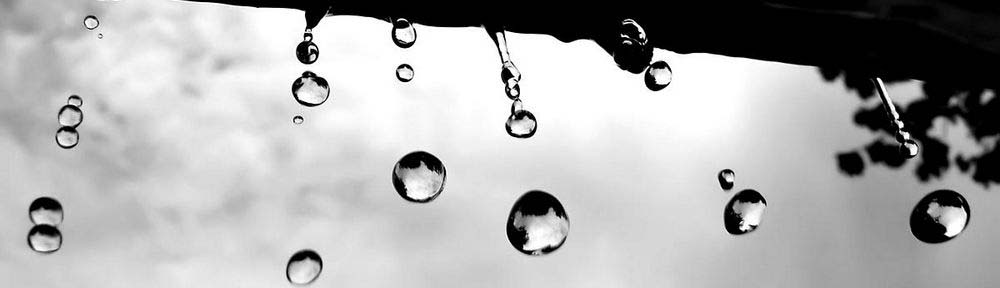
I can apply the principles of the vortex to photography as an art form. At times, I have “obsessions with control and power,” spending hours assembling a scene like the photo on the left, my “fear of mistakes” (29) pushing me to put everything in its place under the guise of creating something. At other times, I walk around with my camera, taking pictures of everyday objects at different angles or under odd lighting, and the results, while not “creative” in the sense of building something new, are my most engaging works. I might spend thirty seconds composing the scene, but I am in the flow, which is “intense clarity about the moment,” and, most importantly to me, with “no concern for failure” (27). This is what I did with the photo on the right, which is a of an everyday building in the Daytona Beach College campus, but with a sense of clarity from the clear sky and nonstandard composition, and there I am using chaos theory. I should now do more of the right and less of the left.
Chapter Two
The lesson is that small efforts can have rippling effects across vast oceans. While the conventional wisdom tells us that the world is composed of “linear systems,” where “small influences” produce small results (33), it is often the case that the results are exponential rather than linear. This is the difference between 10*10 (one hundred) and 10^10 (ten billion). In this way, a thing is amplified, as in the metaphor of “the flap of a butterfly’s wings in Brazil” causing “a tornado in Texas” (33). We can deeply better society through positive acts such as chatting the weather or smiling at strangers, because we are improving the social climate which we are all a part of using “subtle influence” (41)—our cordiality produces a feedback loop in others, for which they become more upbeat, positively influencing the people they encounter, and so on.
The authors explicate their concept with the meteorological experiments of Edward Lorenz. He made long-term weather calculations, but took a shortcut while double-checking the results: he rounded to three decimal places instead of six (32). The results were far different; while he anticipated a .1 percent error margin, all the steps in the calculations were dependent on the data computed previously, so the rounding error increased by orders of magnitude through the process. This is the way the actual weather works; small influences are magnified through “iterating feedback,” so an increased temperature or air pressure cycle may be the root of a hurricane. Nature works this way too; by killing off cockroaches, lizards may die, which may deprive snakes of food, which may eventually lead to the destruction of an ecosystem. Briggs and Peat teach us that we can use the butterfly effect to exercise power in our everyday lives, where we may seem powerless. Rosa Parks, who would not be forced to the back of a bus for a white man, created butterfly power, in which thousands of others boycotted the buses, leading to the eventual fall of segregation (28-29). This is chaos theory in action.
The principle I work by in library service is “do good always,” meaning that I look out for the best interests of our patrons, putting in effort to get them the information that seems most relevant and reliable, ranging from questions like “where’s the bathroom” to “how can I build a bathroom?” (I had that question last week, and was thankful to find that The Kitchen & Baths 1-2-3 was in the right place on our shelves.) I have gone to libraries where the librarian is rude or dismissive of inquiries, where I could get no help searching the computer databases, and where asking the librarian to look up the book for me seemed like an imposition. My grandmother, in searching for a book on health remedies, recently told me that she was told it was “not their job” to “train” patrons to use the neo-card catalog (computer terminal). I do not demean patrons for bringing in lists of popular movies they want to put on reserve, or for asking how to use a mouse or set up an email account on our public computers, and it is my hope that through the butterfly effect I am positively influencing the entire community.
Chapter Three
“Going with the Flow” shows us that groups formed from chaotic self-organization are “highly adaptable and resilient” (59); often moreso than their structured counterparts. John Holland argues that most of our laws, such as for “traffic, health and safety, [and] consumer protection” were not “planned in advance,” but came about in response to feedback loops, contributing to their hardiness (59). This shows that good systems evolve from the bottom up. Trying to control the “natural chaos of society” is ineffective, such as the Chinese communists’ attempted command economy, which caused “catastrophic shortages and famines” (60).
Organizations, including governments, corporations, and even our beloved Daytona Beach College, tend to become “increasingly mechanical and impoverished” (69), in that as they increase in size, policies evolve to treat people impersonally, like cogs in a machine, for the purpose of efficiency and formality. Unforgiving, check-box style employee evaluations make it so that “people are not allowed to . . . make mistakes without paying heavily” (70). While such companies champion creativity in name, their hierarchal structure is made for “preventing those creative qualities from ever self-organizing within corporate walls” (70), enigmatically.
Despite rigid structure, all organizations have “subtle influences and chaotic feedback”; they must have “strange attractors” to keep people, and are quite often “open, nonlinear systems” (71-72). When we stop working toward an “ideal” of a inflexible, mechanical bureaucracy, instead embracing fluidity, innovation, and other more human traits, we can harness our creativity as a whole.
I can apply the lesson to group interactions, such as in QUANTA’s activities and projects. David Bohm says that dialogue is deeper than discussion, where “we suspend our opinions and judgments in order to be able to listen to each other” (74). Too often I stick to my own ideas and reasoning while ignoring the input of others, so “suspend[ing] and transform[ing]” such “nonnegotiable convictions” (74-75) can make me a diplomatic mediator and a more reasonable person. I would also like to stop seeing “individuals [as] essentially separate particles” (78), but rather as connected cells in a larger body. If instead of assuming I must “break the ice” with strangers, I assume there is no ice at all, I can build better connections while harnessing chaos’ underlying links.
Chapter Four
Life often appears polarized as either extremely simple or unfathomably complex. Mathematical fractals, which appear infinite and random, are actually simple and repetitive (81). Chaos “bursts, uninvited, into our lives” (86), but can be a cleansing process rather than a feared intruder. Pythagoras is a good example; before him, the only known numbers were integers and ratios of integers, but he made things complex by discovering that a right triangle with a base and height of one has a hypotenuse of the square root of two, an irrational number (87). Such numbers are “bursts of infinite complexity, of total randomness inside an otherwise regular system” (88), because they continue randomly and indefinitely, carving their own space on the number line. The discovery was “scandalous,” at first, “suppresed by the Pythagorean brotherhood” (88), but eventually came to be recognized as a great step forward in our understanding of mathematics. In this way, chaos produces “renewal [and] transformation” (86).
Complexity is inherent in “the way things interact with each other,” but not so much the things themselves (89). This is a shift away from hard science such as molecular biology, which “abstracts and simplifies nature” (90), but we must recognize it to avoid fragmentation. Lewis Thomas argues that if we tried just to understand everything about a protozoan, we would find that we could never know everything about it, because that “would require understanding its connection to the entire history of evolution and the . . . environment” (91). This is complexity theory’s thesis—we cannot continue breaking the world into chunks.
What I see from this chapter is that the world is not black and white, but rather shades of gray, just as nothing is truly simple nor complex. Briggs and Peat write that we try to simplify during a war, seeing the enemy as a mere “evil brute,” while our side is infinitely virtuous (93). The enemy follows suit, but the “real truth” (if we may call it that) is somewhere in between. I am guilty of being overly analytical, which may lead me to a fragmented view of the world. Where I can learn to see nuances and subtleties is in my studies on the piano; I should accept some mistakes, off-tempo playing, and my own improvisations as my creative additions to the classical pieces I play. I will write more letters by hand; I get too caught up in my “digital strategy” (90) for the world that I ignore the feeling that is lost in typed text. “What’s between” is often more interesting than what is at the edges.
Chapter Five
Till the Middle Ages, art was seen as rational, in that it meant “seeing the spiritual connections in things, the rhythms and delicate balance or ‘ratio’ among subjects and objects” (120). Since the industrial age, rationality is viewed in a mechanical way, it being “the capacity to be logical, analytical, coldly objective, and detached” (120). Our “enlightened” view denies the “nuances and resonances” that exist in our world; organic patterns such as snowflakes, river streams, or even the “self organized chaos” found in “towns and villages” are conveniently ignored (123). Unlike widgets from a factory, each person, tree, or cloud formation is “self similar” (103), in that there are others like it, yet it is unique for having variable subtleties. When we accept this, we can appreciate the art that abounds in nature’s creativity.
The authors show us fractals in flames, ice, rocks, and clouds (101-107). Even our brains are fractal folds of neuronal tissues, each different from the rest (107). Like with Dionysus, rationality is creativity (121). One idea that comes from the mechanistic view is that we can “spray 50,000 tons of propane or ethane into the South polar sky” to heal the ozone layer (122-123), but if we step back to see that nature is complex and intertwined, we will know that “piling one technology upon the problems created by other technologies will only perpetuate the mind-set that is destroying our natural world” (123). The fading ozone layer cannot be fixed by kludges, but rather by going to the source of the problem (our pollution).
I can use this lesson in my photography. I have always looked at everyday scenes as being artistic, but have shot less still life and scenery at the coaxing of my photography professor. After the end of the semester, I will be getting back to my roots of “seeing the art of the world,” such as in the fractal patterns of roses, sunlight, cloud formations, and other elements of nature. My best creations come when I am not rigidly analyzing the frame, but instead composing for whatever looks good to my eye, and by doing more of this will be harnessing chaos theory.
Chapter Six
We think of time as constant and unchanging, a force that is “mechanical, impersonal, external, and disconnected” from ourselves (125). Our real perception of time, however, may be “composed of clusters of tiny discontinuities” (126), such as how “events happen in slow motion” when we are about to crash a car (127). The authors argue that this may not be the mere rush of adrenaline hormones, but really a “clear vision of just how things really are in the dimensions of time”; we abandon the clock and take on “fractal time,” with it’s “temporal nuance” (127). By using time “as a shopping basket,” we “lose the flavor of life” (139). Sadly, the modern corporation tells us “you’re supposed to be working all the time you’re here” (141), which leaves no time for reflection and creativity which would otherwise boost our productivity and spirit.
An example of elastic time is the psychiatric discovery that “a dream unfolds in the brain in only seconds,” though it may seem to encompass hours (232). “Our brains never remember an event in exactly the same way twice,” because each recollection “connects to the whole structure of our consciousness” (232), including our own awareness of time. The Polynesian islanders recognize this, with their afternoon fiestas being an “hour” that is “more than 100 of our minutes.” But when they are working fiercely in the morning, an hour may be “only a few tens of our minutes” (136), which demonstrates a truer definition of time—one connected to how much work we do and our internal rhythms.
While I live in a world of QUANTA assignments based on mechanical time, I can still disconnect in hobbies like photography, music, and shelving books at the library. I made a step toward fractal time in mid-2007, when I vowed never to wear a watch again. It served to keep me obsessed with the clock, even in lieu of pressing appointments, and so dropping it lets me focus on “the rich time of nature” (137). If I need to know the time, there are plenty of clocks on the walls.
Chapter Seven
With our long-standing “mechanical perspective,” we see ourselves as “no more than a collection of externally related parts” (162). This is like learning to drive a car from an owner’s manual and technical diagrams. We, just like the Earth, are more complex than the sum of our parts. Traditional Cartesian science avoids subtleties and intuition, but that is in fact where the most truth lies. To find unity, Briggs and Peat say that we should develop “an ability to reason aesthetically,” switching from “obsessive focus on control” to recognition of “emergence and change,” so that we may become participants rather than masters of our world (165).
The authors use the Native Americans as an example of inter-connectedness, with the story of a young man who would “travel across the United States and Canada attending powwows.” Despite not having money, “there was always someone to give him a lift to the next reserve”; he “trusted the system” of “all my relations” to support him (163). As a middle-aged worker, he does the same for other youths, keeping the tradition alive. In our psyches, there is a “sense of solidarity with the entire human race,” yet since the Renaissance, the prevailing ideology pins us as “isolated individuals” (162-163). The very definition of “consciousness” has changed from “what we are knowing together” to what we know as fragments (149). To rejoin the whole, we must tear down these imaginary walls between us by embracing the community as an extension of ourselves.
I am going to be applying this over my remaining year at Daytona Beach College, as I will be involved with my peers in Phi Theta Kappa, and more open to connections with others through the group skills from QUANTA. I am living compassionately instead of competitively, which involves diverting focus from myself, and instead helping others and valuing our community.
Work Cited
Briggs and Peat. Seven Life Lessons of Chaos. New York: HarperCollins Publishers, 1999.