College is for Dummies

By Richard X. Thripp at 2008-08-14T06:43:32 in Personal Development, with these tags: college, goals, money, myths, 0 Comments.

A college education is thought to be a requirement for success in modern America. We swallow, hook, line, and sinker, that higher education is an unassailable good. But what if it isn’t?

• Revisionist history. You get to learn that our founding fathers were unchristian, that the American Indians were peaceful savages, and that the Earth would be better off without humans. Then you’re tested on this, and you’ll “fail” if you don’t give the right answers.

You got enough of this in high school; do you have to subject yourself to four more years of it?

• All the great entrepreneurs skipped college, or dropped out as soon as their idea went big. (Steve Jobs, Bill Gates, the creators of Google and Facebook, etc.) If the college experience is so inherently valuable, why would anyone leave as soon as they started making lots of money?

• A continuation of high school . . . The modern Associate of Arts degree is nothing more than a repeat of what you were supposed to be taught in high school. You aren’t gaining any “specialized” skills for your place in the workforce, nor any “life experience” that you wouldn’t be better off acquiring on your own.

• The whole idea of going to college to get a job, to “appeal” to your employers, is all that higher education stands.

• Algebra. Who ever thought that you should mix letters with numbers in math? In the computer science degree I’m working on, I have to go through five courses of this nonsense (algebra, precalculus algebra, trigonometry, calculus 1, calculus 2). All of it completely unuseful to the math problems that will pop up in my life, or any math problems that will appear in computer programming (none of the major programming languages use algebra anyway; it’s too complicated and esoteric). The only reason to learn algebra, is if you’re going to become an algebra teacher.

• No intrinsic value. Today’s college education has no value on its own. Any value it has is assigned by our society or mainstream employers, for the sake of continuing the college charade.

• It’s a job. But unlike a normal job where you’re paid to work, you work for free and you pay them. Then, you get “graded” on your “performance”? Is this for men or for mice?

• Most of the people who are going back to college, are going because they can’t find a profitable venue on their own, have given up hope, and accepted their place in this juvenille system. You’re going to be surrounded by weak people with broken spirits in most college class rooms. Are those the traits you want to rub off on you?

• Start life in debt. Who pays their student loans anyway? Even if you’re not in debt, you’ve wasted years of your life.

• An imaginary safety net. There is no safety. Safety is an illusion. When you can’t find a job and nobody wants your college degree, tell me how safe you are.

• Go to college to be home-schooled. For every hour in class, you’ll need to do two or even three hours of writing and studying on your own to get the actual work done. But when you learn on your own, you must learn what is proscribed, not what could be interesting or valuable to you.

In English, you’ll have to read garbage like Beowulf, The Canterbury Tales, The Epic of Gilgamesh, The Ones Who Walk Away from Omelas… nevermind all the fascinating, historic, non-fictional works you could be learning from. And then you’ll have to write essays proclaiming that everything is sexist / racist / ageist.

Toe the party line. You’re required to use gender neutral language and other newspeak. You have to agree that global warming is real, that we need socialized healthcare, that we need to murder our young and old (abortion and euthanasia). You will be tested on this stuff, and don’t you dare step out of line if you value your grades.

An exercise in Marxism. The purpose of the public schooling system is to indoctrinate our children in the principles of communism, under the veil of community, democracy, socialism. It’s the same thing.

Wake up. College is a monumental waste of time and energy. You’re being jerked around like a cuckold.

The Cancer Myth

By Richard X. Thripp at 2008-07-18T11:40:38 in Personal Development, with these tags: cancer, growth, myths, 2 Comments.

Our “treatments” for cancer are no good, kill everyone, and waste a lot of money. The cure for cancer is simple and has been widely known for thousands of years, but is kept hidden from the typical American. But first, let’s tackle some of the arguments for our beloved cut/burn/poison regimen.

Investment is nothing. It doesn’t matter how long we’ve been “treating” people with cancer and letting people die. It doesn’t matter that we have billions of dollars and lives invested in our phony treatments, or how many relatives and friends you’ve lost through traditional treatment. No matter how far we’ve gone, we must turn back. There is no progress to be had on this path, no matter how we are invested in it. We were invested in alchemy too.

We are told there are many different types of cancer… and many different treatments… and no easy solutions. The best recommendation is to be constantly tested for cancer, to constantly avoid “known” carcinogens, to constantly fear everything. We have to check your skin, your breasts, your cervix, your ovaries, your prostate, your colon, and a whole bunch of other stuff, every year for the rest of your life. The most prolific unveiler of known carcinogens is the state of California. Everything causes cancer there. I bought a computer mouse with a tag on it warning that the cord has lead in it and can cause cancer, says California. Obviously, there’s somewhere the money is going. The money is going to the companies who produce the goods that continually replace the goods that are supposedly cancer-causing. Our cars cause cancer. Smoking causes lung cancer. Drinking causes liver cancer. Sunshine causes skin cancer. Radiation causes cancer, yet also kills it when it’s convenient to us. Really, what’s up with that? If radiation causes cancer, how does chemotherapy work? It exposes you to radiation. So the best it can do is riddle you with cancer, following the cancer industry’s rules. Pesticides cause new and exciting types of cancer. Cell phones cause brain cancer. Everything causes cancer.

Cancer is no ordinary disease. It’s a legend. You don’t overcome cancer like any normal disease. You “fight” a long and unsuccessful “war” against cancer, then die. Cancer makes you sick, tired, emaciated, and hairless. Really, none of this is the cancer. It’s the phoney-baloney treatment of cancer. You aren’t losing the hair from the disease, you’re losing it from being irradiated in the name of destroying it. The best it can do is kill off the cancer for a while, followed by its return (because it’s a vitamin deficiency). Then, we hit you with more gamma rays, and instead of the disease killing you, our treatment does you in. You’ve weakened, but the cancer is stronger than ever. Because it isn’t something that can be solved by treatment.

Cancer is caused by a deficiency of vitamin B17, also called laetrile or amygdalin. According to the Food & Drug Administration, vitamin B17 isn’t a vitamin anymore. It has no value, it does nothing, it could even be dangerous, it can’t be in stores, and doctors can’t dare recommend it. The vitamin isn’t added to our foods. In fact, if it’s there, that food is dangerous to us, and the vitamin is removed before we buy the food. You find vitamin B17 in the seeds of fruits, seeds like apricots, peaches, watermelons, and loquats. Common knowledge tells you that eating seeds is a dangerous, deadly thing to do. They have cyanide in them. Cyanide? Won’t that kill you? It’ll kill you the same way sodium chloride (table salt) kills you. The deadliness of the ingredients means nothing, because when they’re assembled in a different order, there is no danger. This is why your breakfast was delicious and didn’t make you sick, but if you ground it all up (milk and orange juice included) in a blender, and then drank that, you wouldn’t be feeling so well. It’s the same concept with vitamin B17’s cyanide.

We don’t eat seeds anymore. You parents probably told you to throw out the seeds from those apples. “Never eat the seeds,” they say. If you buy an apple pie at the bakery, you can bet the seeds have been taken out. At the same time, many victims of cancer get better from the chemotherapy. Why? Because they were deathly afraid of the disease, and while pursuing traditional treatment, they went to the local health foods store and ate everything in sight. One of those foods had vitamin B17 in it. The patient doesn’t even know what it was, but he continues to eat it as his miracle cure. Perhaps he bought a jar of pumpkin seeds. Either way, it works. But his doctor says, “it looks like the radiation finally started working!” That’s how chemo gets its 5% cure rate for cancer (otherwise it would be 0%). Yes, nineteen of twenty die, despite radiation treatment. What kind of odds are those? What other disease do you claim to be making great progress on, you pour a third of the nation’s medical expenses into, you have more people treating than suffering, and 95% of your people still die? Old age is the only one I can think of, and that’s not a disease to start with. The only effective treatment we have is to screen you constantly and then cut pieces out of you when we find cancerations.

But the seeds, the seeds are what you need to eat to cure cancer. But even if you don’t have cancer yet, you need to eat them every day starting now, or else you’ll get cancer. Cancer doesn’t run in families. People will say, “I got cancer because my father and grandfather had it.” But the fact is that they shared the same diet, a diet excluding B17, and that’s why they all got cancer. Just like if none of you eat oranges, you’ll get scurvy. But you probably won’t even get scurvy, because vitamin C is added to all sorts of foods by government mandate. Not the same can be said for B17. If you and your family has never gotten cancer, it’s because you’re eating something that has the vitamin in it, that is preventing you from contracting the ailment. You don’t “cure” cancer so much as you prevent it, just as you prevent hunger and thirst by eating and drinking. To keep from dying from hunger requires continuous action. You must eat food regularly or you will die, no buts about it. The same is true with cancer. No ionizing machine or ray gun is going to keep you from dying of thirst, just as no mechanical, ridiculously expensive medical treatment is going to save you from death by cancer. There is only one type of cancer, for which there is one cure.

Almost no one treating cancer knows its true cause. No conspiracy works when everyone has all the answers. But the answer has been known in other countries for thousands of years. Even the Bible tells you to eat the seeds of the fruits, and to eat your “daily bread.” Bread used to have lots of seeds in it, seeds that had vitamin B17. But now the seeds are taken out. There is no cancer-preventing vitamin to be had in our food. This is why despite plowing so much money into cancer, more people than ever are suffering from it. We’re told now that one in two of our children will contract cancer at some point in their lives. What kind of disease is this? Obviously one we have no idea how to treat. Whatever we are doing, it’s completely failing.

If you contract cancer, and you dare not to be “treated,” no one will support you. Your family will be against you. Your doctors will be against you. You must do things the “right” way. If you have any chance of living, it’s only by being cut, burned, and poisoned. You have to do it. If your below 18 or there’s any shadow of doubt about your sanity, chemotherapy will be forced upon you, because everyone wants to see you die.

But it doesn’t have to be that way. In Central Florida, we have all these loquat trees with fruit (a.k.a. Japanese plums), and they have big seeds in them that have lots of the vitamin. My Dad and I eat a couple of them a day. We froze them when the fruits were in-season, and thaw them out bit by bit, chewing them up and swallowing them with water. So now I know I’ll never get cancer. I’ll never get cancer, so long as I eat seeds with vitamin B17 in them on a regular basis. Just like I’ll never develop a goiter if I eat foods with iodine in them. Salt has iodine added to it. No processed foods have B17 added to them, so you need to find it yourself. Just like you don’t wait till you’re dying of scurvy to start eating oranges, you shouldn’t wait till you’re dying of cancer to start eating seeds.

I haven’t covered the proof behind vitamin B17. Instead, I’ve focused on how our “normal” treatments for cancer are such blatant failures. Anything is better than what we have now, even if it does nothing. But B17 does something. It prevents cancer. We’re not eating it, and that’s why we have cancer. There’s no danger in eating seeds either way. I’ve been doing it for months. But there’s real proof that the vitamin stops cancer, because cancer is a metabolic disease cured by B17, just like beriberi, pellagra, and scurvy, are cured by B1, B3, and C. You can’t cure a metabolic disease with technology. Only restoring the essential food your body needs can solve the problem. I recommend these online pages for further information:

1. World Without Cancer
2. VitaminB17.org
3. Laetrile / Vitamin B17 Treatment For Cancer
4. Cure and Prevent Cancer — B17
5. Laetrile and Information on Vitamin B17
6. Unapproved by the FDA — You’ll never see B17 at the pharmacy, because the FDA refuses to test natural chemicals.
7. Loquat nut any good? — An interesting forum discussion about loquat fruits. Notice how the early posters warn about how the seeds will poison you with cyanide. It’s a lie: I eat them all the time. But they’re just repeating what they’ve been told by the American Cancer Society, because it’s in their interest to keep cancer going. Then the later posters get into the truth: the seeds cure cancer, are not poisonous, and are used all over Japan to prevent the disease.

Good luck, and don’t live in darkness. All the things we say cause cancer actually have nothing to do with it. But that doesn’t mean those things are good. Sunshine still burns, smoke still irritates your lungs, and you still have emphysema to worry about. But if we can get the legendary cancer out of the way, then we’re well on our way to a healthier world.

One thing that definitely does not stop cancer, is happiness. You can’t laugh or motivate your way our of cancer. It just doesn’t work that way. There are plenty of things you can use your willpower on, like becoming smarter, more creative, more productive, more insightful, more courageous, or more disciplined. Curing cancer isn’t one of them. If attitude makes any difference, it’s 0.0001% of the equation, and the vitamin is 99.9999%. It’s so insignificant that it is completely unuseful. Apply your good spirits not to falsehood, but to truth.

10 Reasons Why Photography Sucks and Isn’t an Art Form

By Richard X. Thripp at 2008-06-20T08:32:30 in Photography Articles, with these tags: art, myths, photoshop, rants, 4 Comments.

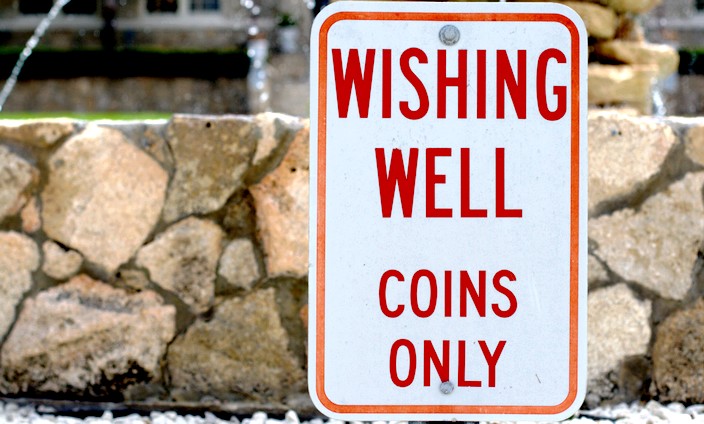
The wishing well

“I wish photography could be an art form. I love it so much, but it’s just too easy. If only there were some way to mentally cripple the majority of the population from being able to take beautiful photos, or if I could make the craft so needlessly difficult to only be accessible to a tiny few. Maybe then I can trick others into thinking I have talent where there is none. Oh photography, why must you be so simple and uncomplicated!”

We’ve been tricked—all of us—into believing that photography is an art form requiring skill, talent, patience, and “the eye,” when outside of fairy land, it requires no more skill or talent than driving a car, or pushing buttons on an elevator. What kind of art form would have these ten traits?

1. Anyone can do it. While we’ve not proven the infinite monkey theorem for reproducing Shakespeare’s Hamlet, surely a monkey could take a good, interesting photo. In fact, with today’s auto-focusing, auto-metering, easy-to-use cameras, I have no doubt that a monkey, with some practice, could take a photo as good as Sunrays or The Red-Brick House. Do you like doing the job of a monkey?

2. No talent involved. You’re in a good place, you take a good picture. You’re in a bad place; you get nothing. It doesn’t matter if you have passion or willpower. If someone else is in the right place at the right time, they can easily capture the moment just as well, even if they’ve been handed a camera for the first time. You can’t say the same about any real art form, like playing the piano, or drawing, or sculpting, which require years of experience and practice.

3. No creativity. When you take a photo, you’re using a tool to save a copy of a scene. You’re creating nothing and the camera’s creating nothing. If the camera does create something, it isn’t art—it’s a defect. The more you protest that your badly-composed, out-of-focus pictures bear your unique artistic sensibilities, the more you satisfy your own delusions. Photography is about as creative as mowing the lawn (and if you think that’s creative, then you have my sympathy).

4. It doesn’t help you to look at the world differently, no more than painting, or sketching, or kayaking, or any other hobby. If anything, your view of the world narrows, because you’re stuck looking at it through your narrow viewfinder.

5. It’s an art that’s not a science, and a science that’s not an art. If my five-year-old sister can cover my job on our vacation to Disney world, then what kind of science is that? Normal scientific processes are torturous and difficult to master, like constructing a high-rise bridge or installing an Olympic-size swimming pool. Scientific arts like performing a complex piano piece or crocheting a beautiful sweater require years of expertise and practice. Not photography. Photography is for dummies. Then on the other end, we have b.s. science touted by the “artists,” like megapixels, lens optics, and sensor reflectivity. They have no idea what this stuff means, nor do they need any understanding of it to take pretty pictures, but they pretend it makes the craft complex, and their jobs, difficult and valuable. Kudos to the engineers, sure, but I’m not scientific as a mere photographer, any more than I’d be an auto mechanic for driving a car.

6. No future. You can’t make money taking pictures. If you do, you’re not an artist, you’re a businessman. Nothing more.

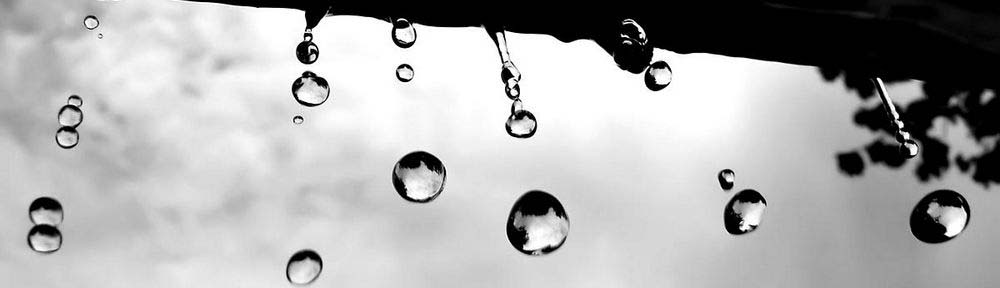
7. Life as a technician. You can’t get a good photo unless you Photoshop the heck out of it, like going from this awful thing to Leafy Droplets 4. Is that creative? My 10-year-old cousin can add some contrast, sharpen, darken the corners, and shift the colors with ease. If you put yourself through hours of this drudgery, you’re no more of an artist than the lab operator at Wal-Mart. A computer can easily replace you. How does it feel wasting your talent?

8. Strokes of luck. If you do capture a great photo that needs no editing, it’s because of reason #3. No talent whatsoever; you were just lucky enough to be in the right place at the right time, and disciplined enough to have your camera ready. So basically, your dependent on fate to bring you pretty pictures to photograph. Don’t you want to be in control of what you create, and when you create it? Do you like doing work that relies on luck, discipline, and drudgery, that you’re not even getting paid for? You may as well be digging ditches. At least then you’d be doing something useful for the world.

9. Join a community of morons. Maybe your smart and join a “camera club.” Then, you get to hear a dozen other people complain about the delay of Nikon’s latest DSLR and make excuses why they can never be a good photographer until they have *insert lens here*. Then they’ll complain about how they can’t attract any money. Maybe if they’d add something real to the world, they’d have the money to buy their toys. If you’re a photographer, you may as well be playing the latest World of Warcraft game.

Or perhaps you’re particularly dedicated and follow your passion to a photography university. Then you get to spend four years and thousands of dollars on the dead art of film, while hearing old codgers whining that the youngsters have it too easy nowadays. You may as well learn Latin. If you want to be a professional photographer, take a business class. But you’re condemning yourself to a lifetime of slave labor. If we had today’s photography before Lincoln’s time, then slaves would be photographing our children’s birthdays and recording our weddings. Why? Because slaves were forced to do tedious, boring, uncreative work.

10. You’re a dime a dozen. You’re building no legacy, you can’t pass your business on to your children, you work on assignment for pennies, and anyone can replace you at anytime. In what other artistic field can anyone do exactly the same work you do, with no talent nor experience? Read rubbish like Is Color Photography an Art? with any spirit of inquiry, and you can see what fools we are.

“Okay, so since photography is really nothing, we’ll give it some class. Only photography done on expensive, time-consuming film is art. No color nonsense—that’s too much like the real world. Digital doesn’t count—it’s missing the needless drudgery. 35mm? Are you crazy? That’s the easy way out.”

Can’t you see how dumb this is? If photography was an art form, we wouldn’t have millions of pages debating the subject. It would be plain and obvious. The very existence of a debate proves that photography as art is shaky ground to stand on. You don’t see anyone debating painting as an art form, or protesting the Mona Lisa as uncreative.

“The color photographer has many means of bringing expression into a scene; the selection of camera position, lens focal length, use of filters, depth of field, film type, exposure, composition, and shutter speed all figure into the image that is produced. During printing, the color photographer has control of contrast, density, color balance, and saturation to convey personal expression.”

Oh puh-lease. “The cashier has many ways of being creative at the check-out line. She can express herself by scanning your groceries swiftly, grouping them by color, double-bagging at her discretion, and suggesting candy bars and periodicals. She has control of the conversation, by making friendly chit-chat or working without delay. Through the artistic medium of words, she has the potential to positively influence hundreds of people every day.”

At least cashiers don’t delude themselves thinking their at the pinnacle of artistic expression and can change the world. Perhaps we aren’t so lucky.

Photography is fine for what it is: a pseudo art form for talentless hacks. But don’t give it more respect than it deserves.

The Return + Film is Pointless

By Richard X. Thripp at 2008-03-18T02:48:45 in Other, Photography Ramblings, with these tags: education, film photography, myths, rants, 4 Comments.

I’m coming back. I mentioned way back on the 7th that I had a sore throat, but was recovering. That turned into a cold; I’d recovered by the 11th, but on Wednesday, March 12, I woke up with an awful sore throat, headache, and fever. Two days later, I noticed the white patch at the back of my throat, so Dad took me to the doctor (it’s expensive without health insurance), who proscribed one gram of amoxicillin (a sister of penicillin), twice per day. He assumed it to be strep throat, skipping the test. My Grandma notes how large the dose is; it’s interesting to read that doctors now proscribe super-doses to everyone because the bacteria has mutated, developing antibiotic resistance from decades of being slaughtered. Obviously, this can’t be a long-term solution, as just like with the Borg, the enemy’s adaptability requires an ever-changing attack strategy.

I’ve been on antibiotics since Friday; I wasn’t well enough to go to school today (Monday), though. The white patch is down to specks, and it hurts less to swallow, so I’m targeting Wednesday to return (no classes on Tuesday, though I’ll miss work). No school missed last week, because it was spring break. But plenty of lost money and grades. Instead of studying, I spent five days suffering on a couch, watching the shameful wart that is network television, sipping from a bottle of dry ginger ale when the pain of dehydration would surpass the pain of swallowing.

I’m thinking I’ll get a B in photography class (there’s no formal feedback, though). I need Monday to develop film and print, but missed today, and my teacher said I was below the standard last week because I developed one roll of film instead of two. Apparently it doesn’t matter that the roll is 36 exposures instead of 20 or 24, or that I put time and/or creativity into each image instead of shooting three dozen images of a tree. I’m so glad I’m not going into photography as a career. Not in the neo-traditional, professionalized sense. Or perhaps, I should trudge through the program, commanding worship and respect for graduating from a community college. Then, I can open a studio, get a little plaque saying I’m a Certified Professional Photographer to hang on the wall, and then print up plain-white business cards saying that I’m a qualified professional photographer and imaging specialist. There will be no images on the cards, of course. That would be unprofessional. There will only be promises of terribly professional conduct.

What I do hate most, is being told that film unlocks my creativity. It’s a lie. It LIMITS my creativity. If you use it, you’re being held back, too. It’s terribly expensive, dust-prone, time-consuming, et cetera. Non-zooming (prime) lenses limit your creativity too. Not doctoring your photos in Photoshop limits your creativity. But we’re fed the same rubbish argument from higher math: “it teaches you how to think.” Would we put up with four years of classes of brain-teasers? If any subject does anything, “teaching you how to think” needs to be secondary, lest the whole thing be a diversion. When Jefferson proscribed reading, writing, and arithmetic, he didn’t mean algebraic theory and calculus.

So how do they say film teaches us to think? First, we’re forced to learn the basics of metering, aperture, shutter speed, etc. Then, we put more time and thought into our compositions, because of the terrible expense of film. This logic is putting the cart before the horse. It’s like trying to first learn the alphabet backwards so you’ll be more prepared to learn it forwards. What we need to do, is to take a ton of photos on a digital camera (even a cheap one), without reading dozens of technical pages from textbooks. If we’re making our photos horribly blurry, or overexposed, or off center, or there’s a trash can in the background, we see it right away and correct it, and from practical experience comes expertise. What could be better for teaching us to think? The professionalized model for “learning” photography is like learning how to drive a car from a year-long technical course. It’s hard to believe that standardized education can make fascinating subjects so boring.

One note on the site: I out-sourced to FeedBurner for my email newsletter, instead of running software on my server. I’m on shared hosting, so this will be more reliable, and free up computing resources for visitors. Sign up today; it’s the same stuff that’s in the RSS feed, which is the same stuff that’s on my website.

No Safety in Multiple Memory Cards

By Richard X. Thripp at 2008-02-10T23:31:08 in Photography Articles, with these tags: cameras, computer science, memory cards, myths, 0 Comments.

For years, I’ve been hearing this wonderful argument: don’t put all your eggs in one basket; it’s better to have several smaller memory cards than one large one, so that if one fails, you’ve only lost a portion of your prized photographs, instead of all of them.

Seems to make sense, no? Distribution and redundancy are the core of safe computing, so we take this argument without question, spending extra to get four 512MB cards, even if the best bang for our collective buck is at 2GB. Yet do we ever stop to think that the entire concept is flawed?

The multi-card proponents convince us that all things equal (reliability and failure rates), four 512MB cards is the safer option.

But hold on a second there. Are the extra cards going for live, RAID-style backups? Are we afforded the advantage that while we sacrifice the space of one card, if any one card fails, no data is lost (RAID 5)? No. We have nothing. Until you get your pictures copied to your computer, there is only one copy in existence, and your work is in danger, either way. Your camera isn’t going to mirror your data for you. Maybe your fancy $3000 Canon EOS-1D Mark II does, but for us mortals, such extravagance cannot be afforded.

Remember that everything is equal, and we’ve just reached the beautiful world of digital permanence by splitting our eggs into four baskets? Billy’s 8th birthday will not be lost, because you had to spread the shots across four cards. If one fails, all is well, because you still have great shots on three other cards, right?

But it is that if that is important. Have you noticed that when you have multiples of something, you’re more likely to have one fail? In a family with three computers, one is constantly on the fritz. With five school-aged children, one is always sick. And with four memory cards, you’re four times as likely to have one short-circuit. The question is, do you want to lose a day of photos every two years, or an evening of photos every six months?

Our friend Murphy says that you will be losing the photos of Billy blowing out the candles, rather than the guests or the clean-up party. You’re going to lose digital photos occasionally, and the multi-card philosophy does nothing to prevent nor reduce this.

Someone is going to protest: “Richard, all memory cards are not the same. Some are more reliable than others; you cannot pretend they are all equal. Plus, you are more likely to have one memory card fail under intensive use, than to have one of four fail under intermittent use.” For them, I want to take this out of the realm of theory, and into the realm of practice.

How often does a door spontaneously fall of its hinges? It doesn’t; it fails when you open it. I have a Canon Rebel XTi, and it relies on a flimsy plastic hinge to stay attached to the camera. When the door is open, the camera magically does not work at all. This is one part I don’t want breaking in the middle of my adventure at the Grand Canyon (no, I’m not going to the Grand Canyon, this is an example). And when is it going to fail? When I open it in the dry, sweltering sun to swap cards, of course!

Memory cards and readers are usually rated for 10,000 insertion/removal cycles. We cannot assume that they’ll last this long; every time you swap, it’s wear and tear on the camera and cards, and with something as important as our photos, we want to avoid as much risk as possible.

Technicalities aside, trading out tiny, expensive, static-sensitive, photo-filled memory cards in the field is just bad practice. No matter how careful I am, I’m ten times more likely to drop my postage-stamp SD card in the grass at the park, or trip and have it fly into the river, than it is to fail on its own accord. Plus, you’ll miss great photos by having to switch memory cards. It doesn’t matter how well you schedule it—you’ll be clicking away, and the Kodak moment will pop up just as your camera flashes “card full.” It happens to me; I don’t even keep half the photos, but there isn’t time to delete on the spot. You can’t be ready for anything if you have no space.

You should have two memory cards, so that when one fails, you can order a cheap one online (with caution, of course), without your camera being completely useless for a week. Beyond two, there are no advantages.


Brilliant Photography is blog #2 & the time is UTC+0. Thanks for contributing to Thripp.com by Richard X. Thripp. Proudly powered by WordPress MU and protected by Akismet. The mission. Join the fun: create a blog!

deviantART, Digg, Facebook, JPG Magazine, LinkedIn, LiveJournal, MyShutterspace, StumbleUpon, photo.net, Twitter
Copyright © 2007-2008 Richard X. Thripp. Browse without photos.