
Before 1994, the Internet was basically unknown. It was just a tool for professors and researchers to connect with their peers. All websites had to be non-profit.
In 1994, the National Science Foundation took away these restrictions. Anyone could register a domain name and start a website, even to sell stuff. Pepsi.com was one of the first, but at the time it seemed a pointless gimmick.
Flash forward to 2008. In the past five years, power has become consolidated between a few major websites, despite the flat nature of the Internet. Google, Yahoo, Facebook, MySpace, and eBay are the major players. These corporations control billions of dollars in capital, yet with the exception of eBay, provide free services. How does this happen?
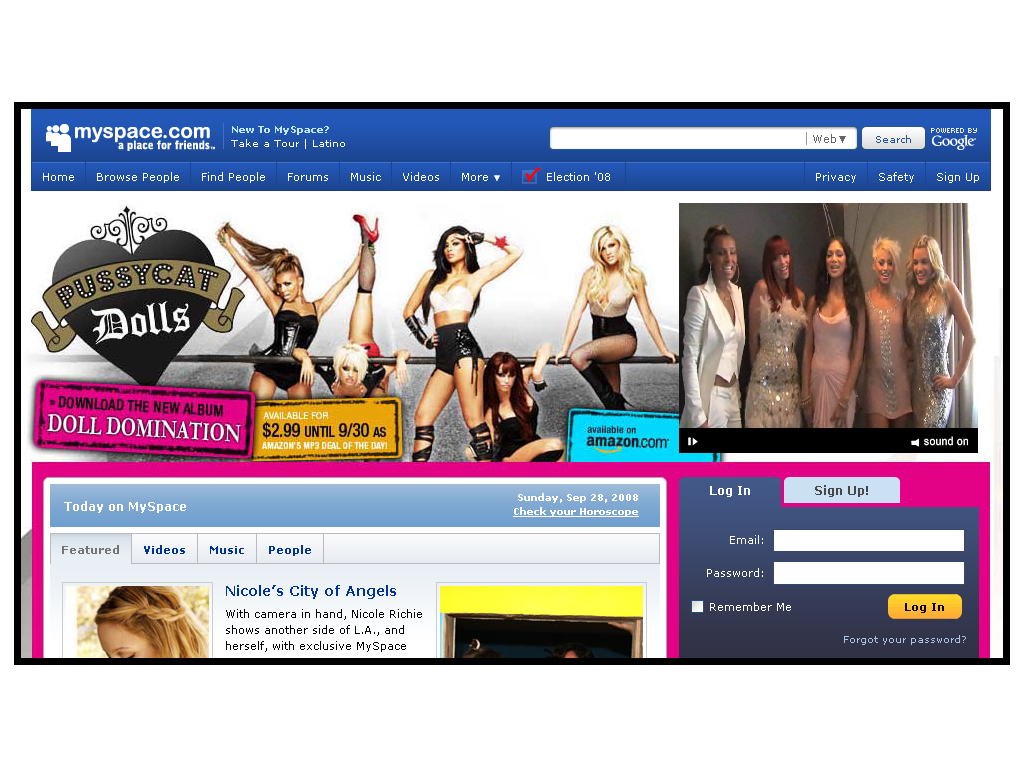
The way it happens is through advertising. Much like how newspapers make money from the classifieds or how the local Pennysaver is completely free despite rising print costs, websites make money from selling ad-space. With technology like HTTP cookies and click-counting, advertisers can pay only when viewers click their ads, or even only when they make a sale. If you think no one buys anything online, take a look at this.
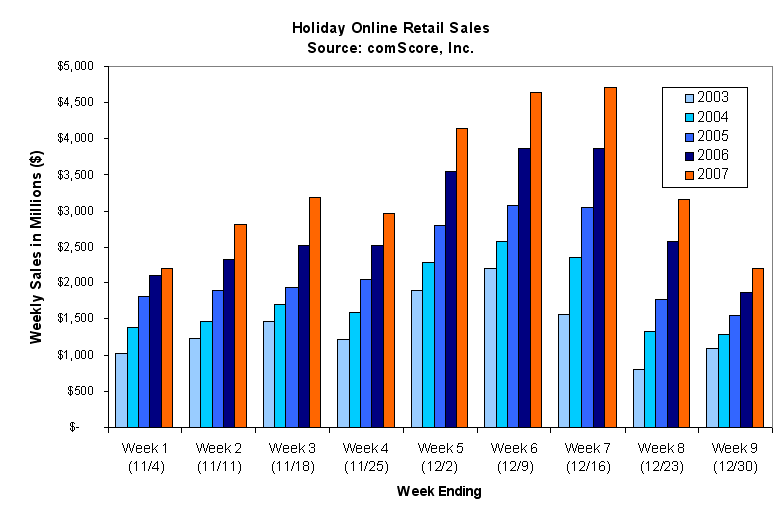
That’s a graph of how much stuff people bought in the 2007 Christmas season. At the peak, for the week ending 2007-12-16, sales totaled nearly 5 billion dollars. Thanks to comscore.com for the stats.
As you can see, people have no aversion to buying things on the web. And unlike with newspapers, websites have far lower overhead. Each visitor costs less than a hundreth of a cent each, while advertisers may be willing to pay in dollars for clicks or sales.
The reason social networks have become so large and wealthy is because most people contribute to them for social benefits, while all the economic benefits go to the operators of the network. Many people may only generate a few dollars in revenue, but with millions of people it adds up. Also, people will join even a hard to use and poorly designed website if all their friends are on it, so the rich get richer.
MySpace has ads all over the place; their home page is one big ad as you can see, and when you log in it gets even worse. People use it anyway because so many people are already using it, not because of it has intrinsic value.
When you’re contributing to MySpace or Facebook or any other network you don’t control, you’re a sharecropper. But what is a sharecropper? This is a good definition.
“A farmer who works a farm owned by someone else. The owner provides the land, seed, and tools exchange for part of the crops and goods produced on the farm.”
Sharecropping on the Internet is even worse, because you don’t even get a portion of the fruits of your labor. You give up not only the means of production, but also all revenue earned and the information itself.
My Dad was banned from YouTube because he’d get into all sorts of political arguments with people there. Not only do they delete all your videos, but every comment you’ve ever made disappears from the site upon your removal. That’s what happens when you’re a sharecropper, and the owners are free to do that because it’s their website. If my Dad didn’t keep backups of everything he writes and posts, he would’ve lost it all.
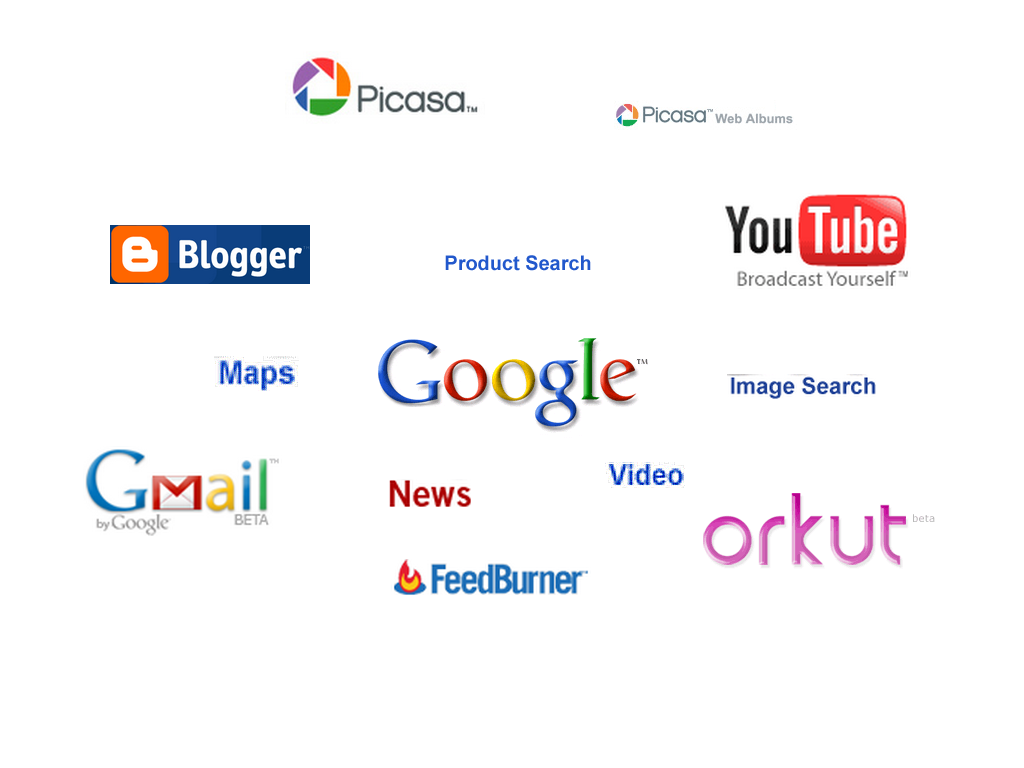
We’re all sharecroppers for Google. Here’s just a few things they own:
It’s hard to keep track of all these services, so they have this nice umbrella called the Google Account:
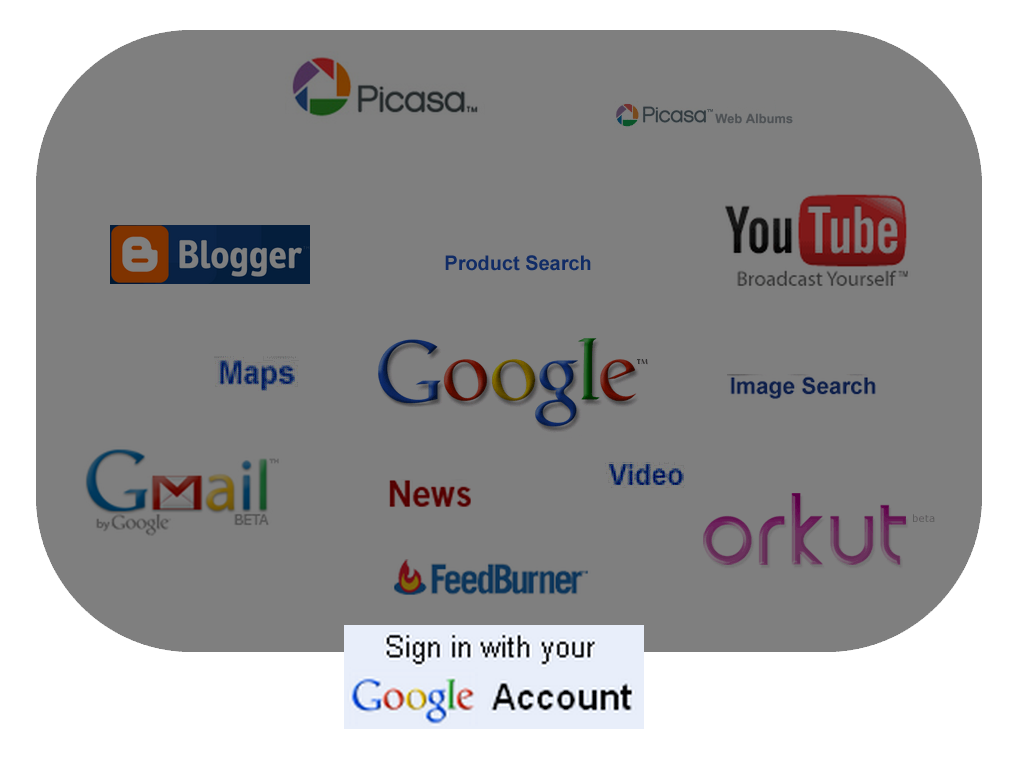
Everything runs nicely for a while. You have all your maps, your credit card data (Google Checkout), your calendars, your emails, your search history, your contacts, your pictures, your blog posts, and more on Google’s servers. Then they decide they don’t like you anymore:
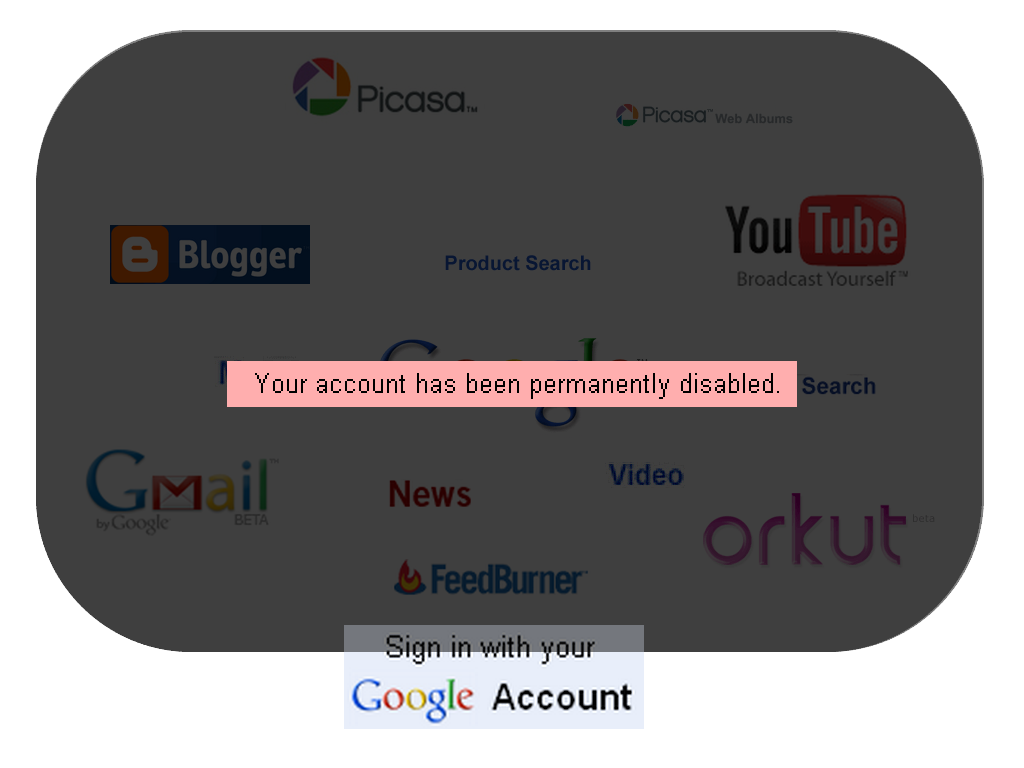
Thanks for being a good sharecropper, we know longer need you. Good-bye. This is the message my Dad got when you tried to log into his YouTube account. Now, YouTube uses Google Accounts, so if he was banned now, his emails might vanish too.
Obviously, Google can’t go around banning all it’s members if they want success, but we’ve given them a lot of power. I don’t know about you, but I don’t like to give up my power, even in the name of convenience.
If you think it can’t happen, take a look at this: When Google Owns You. This guy was locked out of his email, documents, photos, and instant messaging, because Google shut down his entire account. He got it back eventually, but the real problem is that we’ve all given up our power.
Though our computers are more powerful than ever, we’ve become increasingly dependent on Other Peoples Computers. We let Google or Yahoo hold our email so we can get to it from anywhere. We put our pictures on Flickr or Snapfish or Picasa Web Albums so our family can see them from anywhere in the world. But they’re not on our computer, so Flickr or Snapfish or Google can take them down at any time.
Should the government force web corporations to share their profits or hand the means of production over to the people? I say no, because that is socialism and it would discourage new innovation. Like it or not, it’s hard to create infrastructures like Google or MySpace, which allow millions of people to share information for free.
The base-level infrastructure will always be the Internet and sites like you.com, not myspace.com/you. Don’t put much effort into your site on MySpace; start your own site.
Breaking the chains requires you to have a computer on all the time and a registered domain name. You also need software on the web server to manage your photos, text, video, or other content. These are good to start with:
The best way to get a web server, when you’re starting out, is to rent one. You do this through what is called a web host, which costs about $10 a month. You also register your domain name through a registrar, just like MySpace and Facebook do. You have to pay $10 per year for that.
I use GoDaddy.com as my domain registrar and SYNhosting.com as my host. My whole blog and photo gallery is run by WordPress and other open-source modules, and it’s no more work than using MySpace, besides a large up-front investment of time and effort. I’m not sharecropping, because I can easily switch without losing my domain name if I get tired of either of these companies. If you’re a sharecropper and you switch landlords, forget about keeping the same URL.
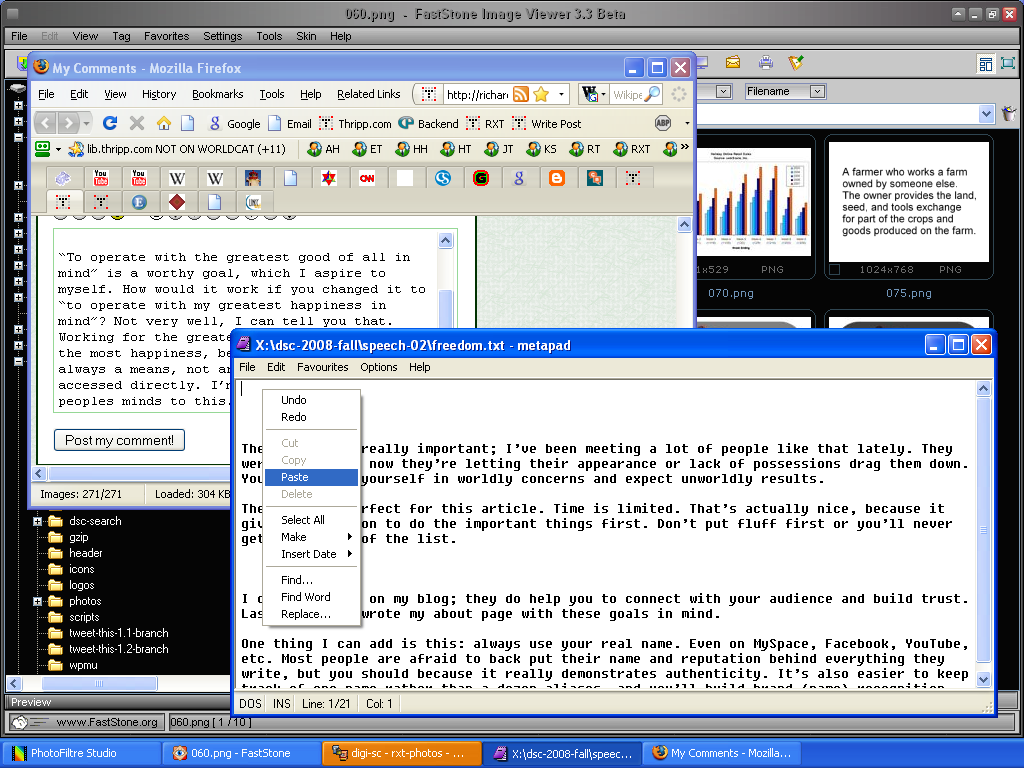
If you can’t do the above, there is an easy, immediate step you can safeguard yourself with. Back up your data. Whenever you write anything on a site you don’t own, copy it to a text or Microsoft Word file on your computer.
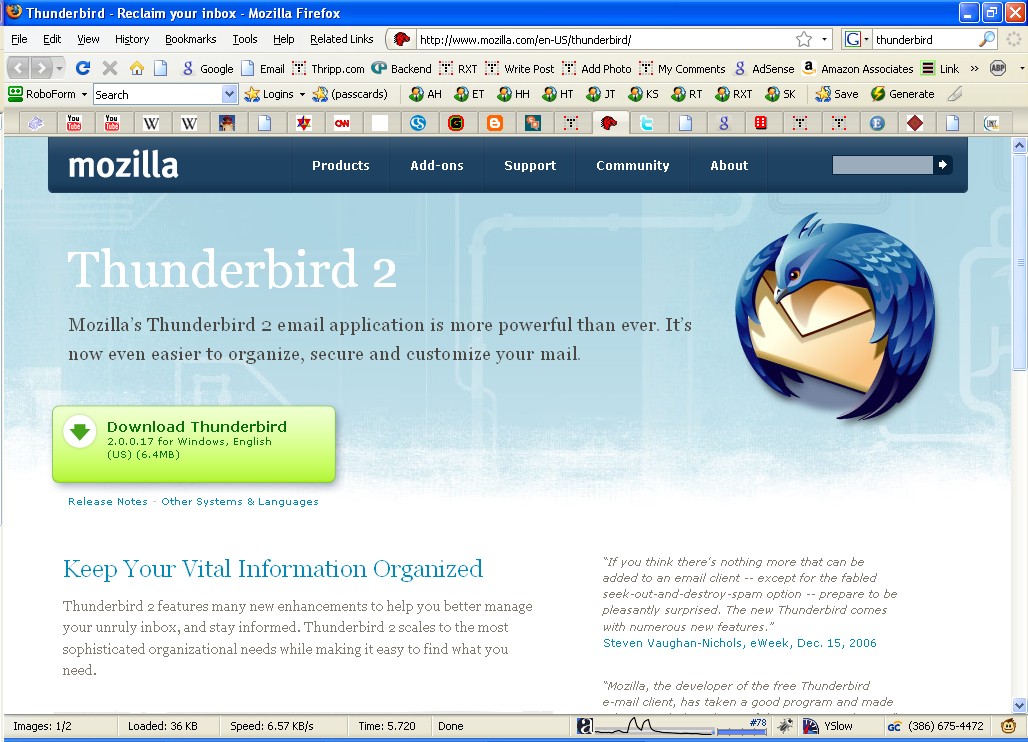
If you use Gmail (owned by Google), use Mozilla Thunderbird to keep a duplicate copy of your email on your computer. Even if Google steals your emails, you’ll still have them on your machine. You can also use Microsoft Outlook Express with your Gmail account, and they even have tutorials on how to do it.
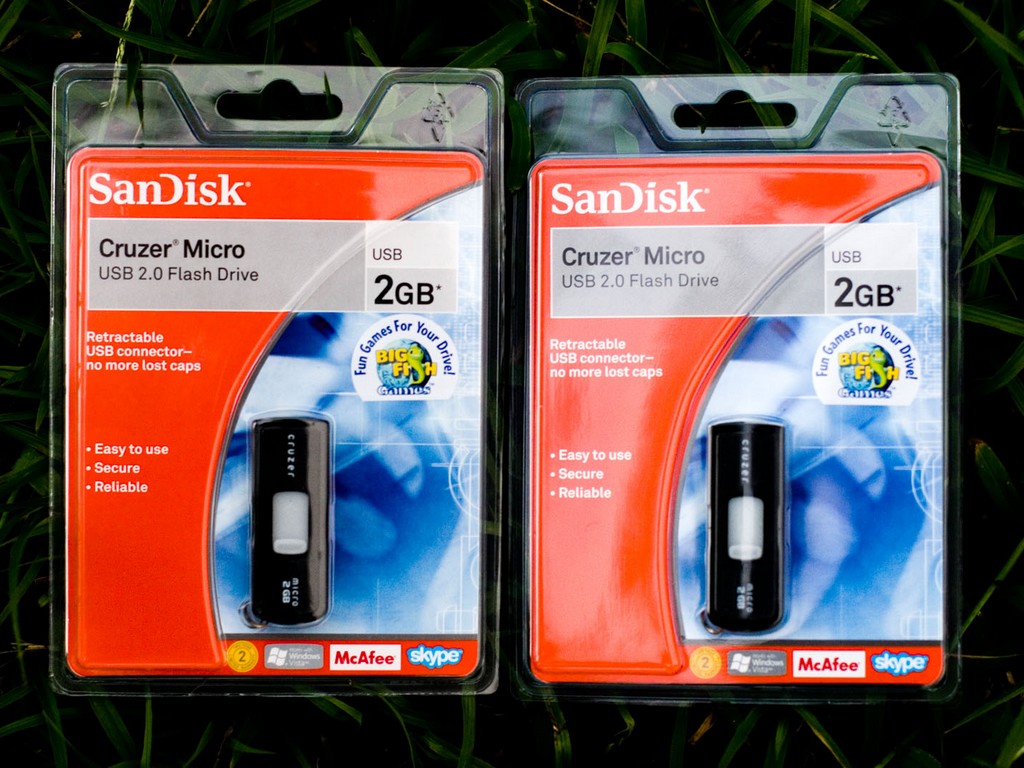
Instead of giving control of your documents over to Google, keep them on a flash drive. You can still get to them anywhere, because you can carry a flash drive with you all the time. Even better, you don’t need Internet access to get to your stuff. Your files are right here, not on some far-off server where they can be stolen or deleted on a whim. Make a backup copy on your computer at home whenever you change stuff, and you’ll be fine.
Moving away from your landlords is hard, but think of it this way: even if you get one-tenth the visitors to your new website and it looks like garbage, it’s still ten times better than continuing as a fruitless sharecropper. You can ever put ads on your site. I made $60 through Google’s AdSense program this month, and while you could say that I’m still sharecropping because I’m beholden to them, if they kick me out I can easily switch to Yahoo’s ad offering or I can sell ad space directly. If you’re on MySpace, you have no such options. There are plenty of ads, sure, but you get nothing for them, even if you become insanely famous.
You can’t be free as a sharecropper.