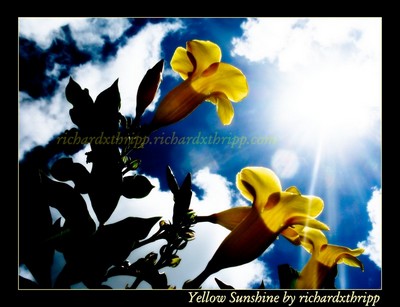
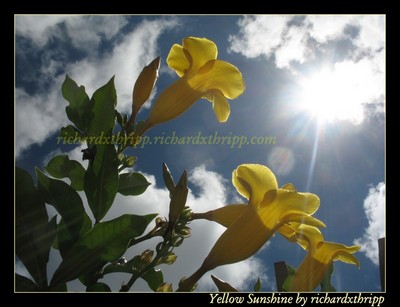
One thing about digital photography, a short-coming compared to film, is that you can’t recover from over-exposure (except somewhat using RAW format [1]). So be sure to get it right the first time, because you can’t edit the detail back in [2]. Note that in that photo [2], the white highlights in the sky aren’t actually clipped (if they were “clipped,” they’d be pure white), but if your monitor is too bright [3], you won’t be able to tell by sight. Same goes for you camera’s LCD screen. This is why you have the histogram [4] (hopefully, anyway; I used to have a Fujifilm A360 camera that completely lacked it). If the bars trail off to the right, you know your photo has pure white areas (over-exposure), and if it continues to the left, you have pure black areas (under-exposure). If it does both, as it often will during mid-day, there is too much contrast in the scene. Usually, clipped shadows, like the ones in the black areas here [5], are more pleasing than clipped highlights. The sun (below) is an exception, as we expect it to be bright (same goes for the sky, but not in sky-centered photos like sunsets). The photo also has clipped shadows (the flower buds on the left), but it looks nice still. However, I increased the contrast carefully on the computer (the second image is the original); it wouldn’t look that good straight from the camera.
 [6]
[6]